Recent days out

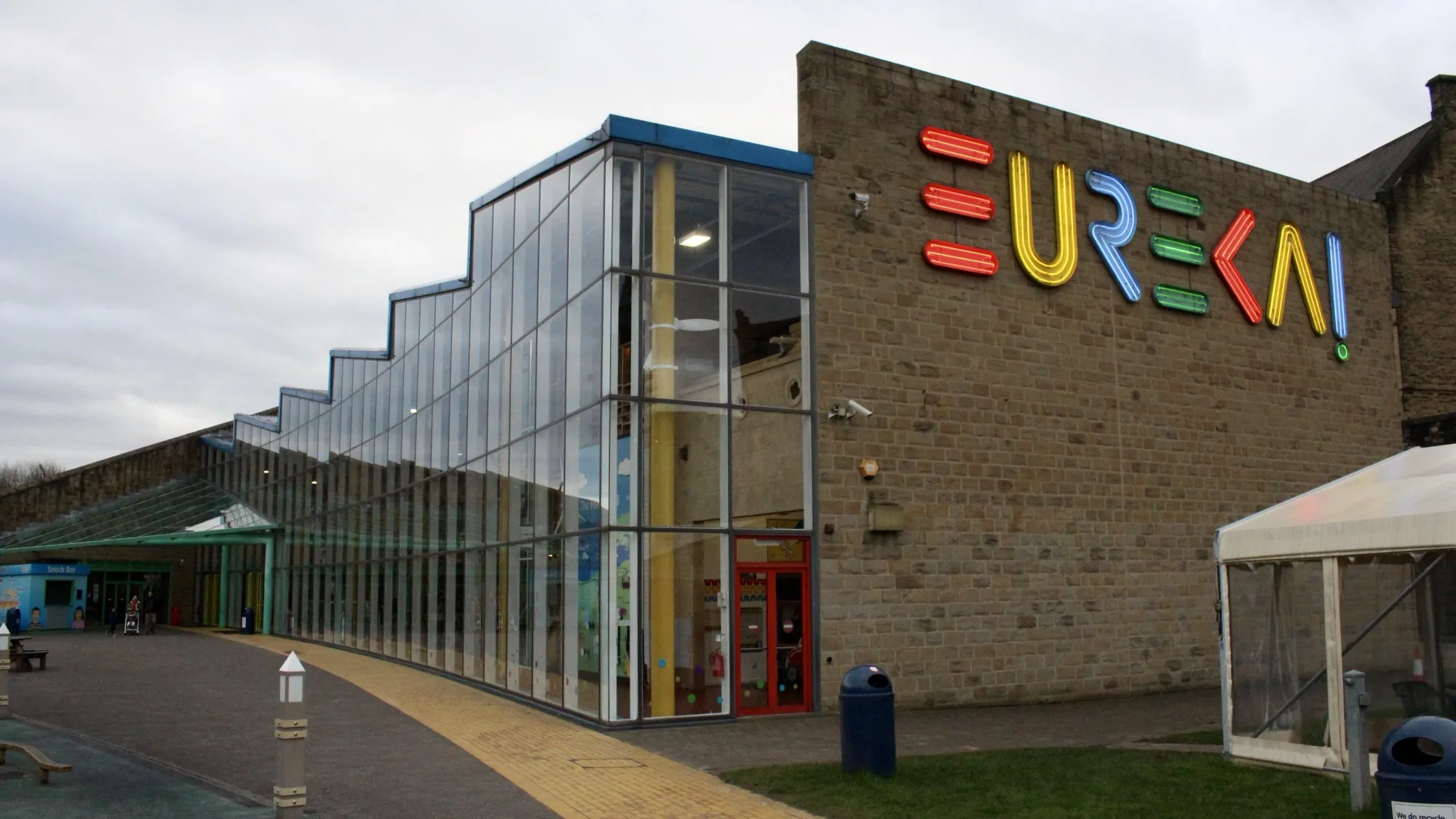
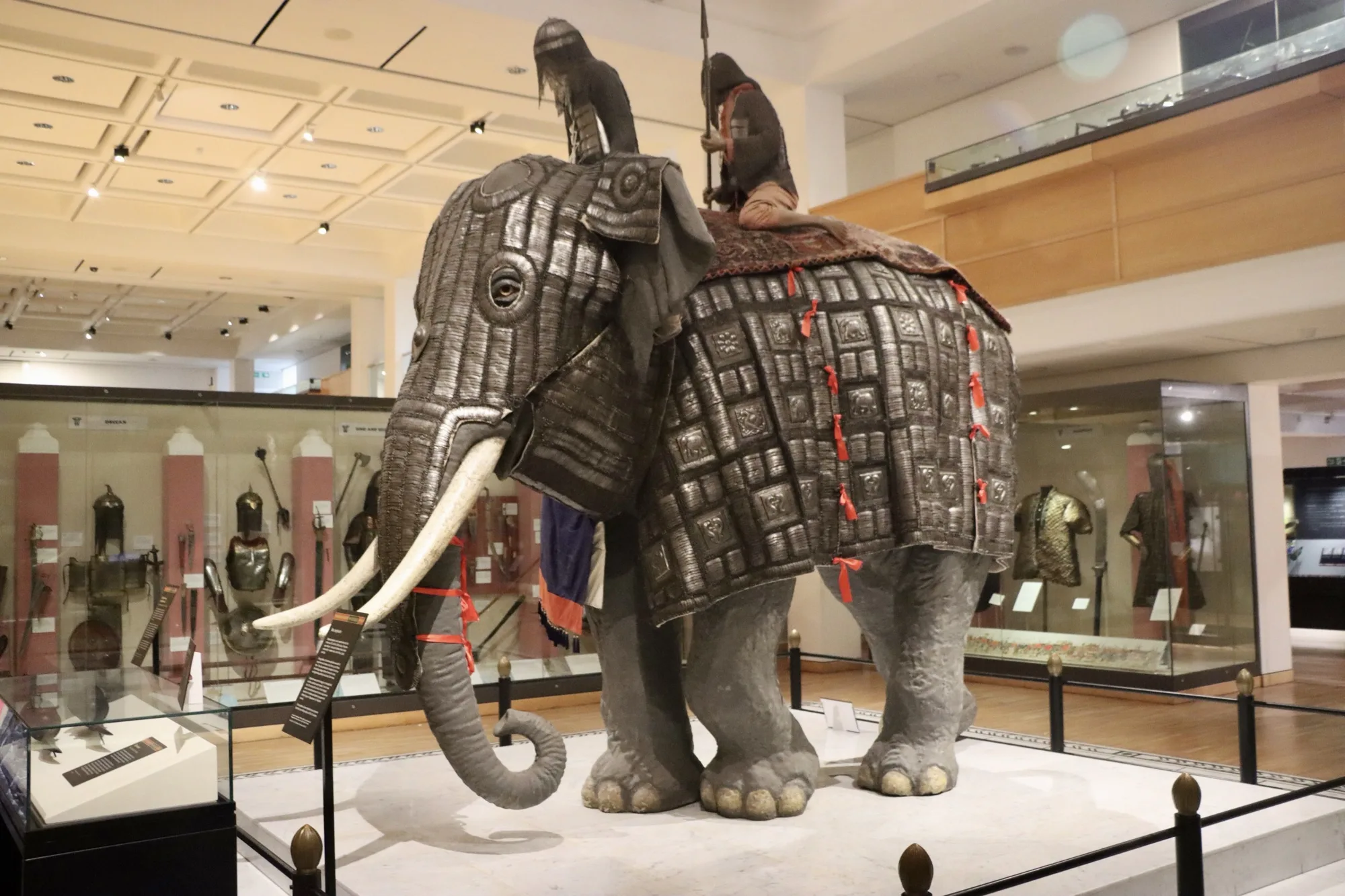
A model of an armoured elephant at the Royal Armouries museum in Leeds

Although it’s currently the bleak midwinter – and I mean bleak, with sub-zero (Celsius) temperatures last week and Storm Isha this week – we have managed a few days out. Some of these were in the first week of the year, as our eight-year-old didn’t go back to the school until the following week.

Here’s where we’ve been:

Manchester Science & Industry Museum
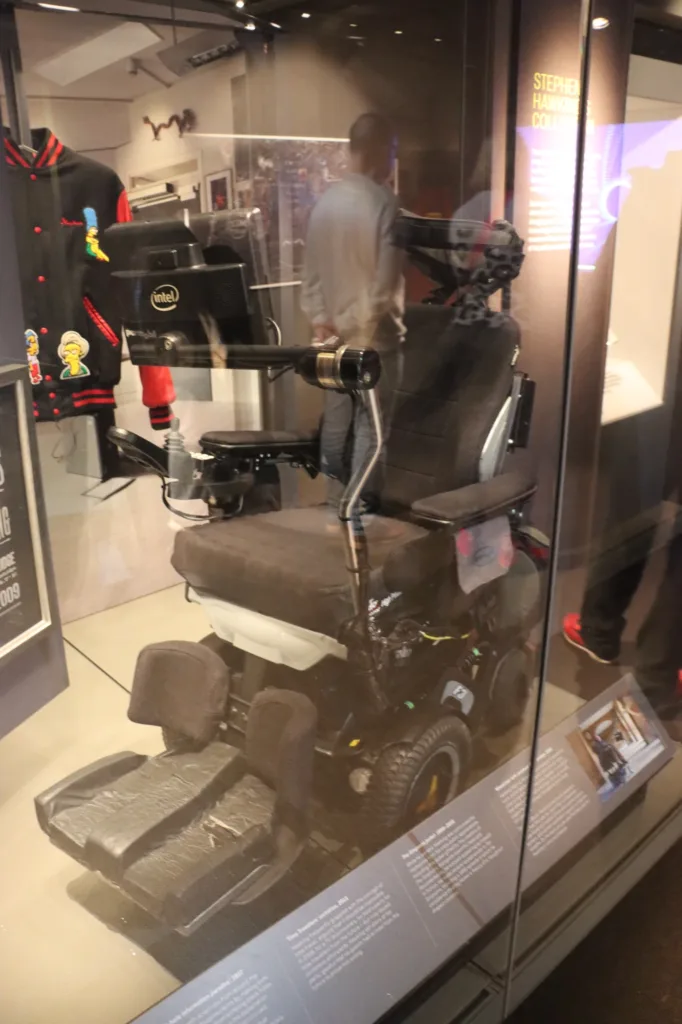
A photo of Stephen Hawking's wheelchair, currently on display at the Science and Industry Museum in Manchester

The Science and Industry Museum in Manchester is somewhere that we typically end up at least once a year. This time was mainly for the Food, Poo and You exhibition, which features content from the presenters of Operation Ouch (including Dr Chris, writer of Ultra-Processed People). It didn’t take much convincing our eight-year-old to go to an exhibition about poo, and it’s well presented. Just be aware that, whilst the rest of the museum is free, this is a paid-for exhibition and you’re advised to pre-book. My wife happened to be working that day and so I expect we’ll be going back before it finishes in June, after which it’ll probably go to the Science Museum in London.

Also there at the moment is Prof Stephen Hawking’s wheelchair. I was naturally more excited about this than our eight-year-old was.

What isn’t at the museum at the moment is, well, about three quarters of the museum. It’s just what’s available in the ‘New Warehouse’; a huge restoration programme means that the other buildings are closed. The Power Hall should be open again next year if all goes well.

Eureka
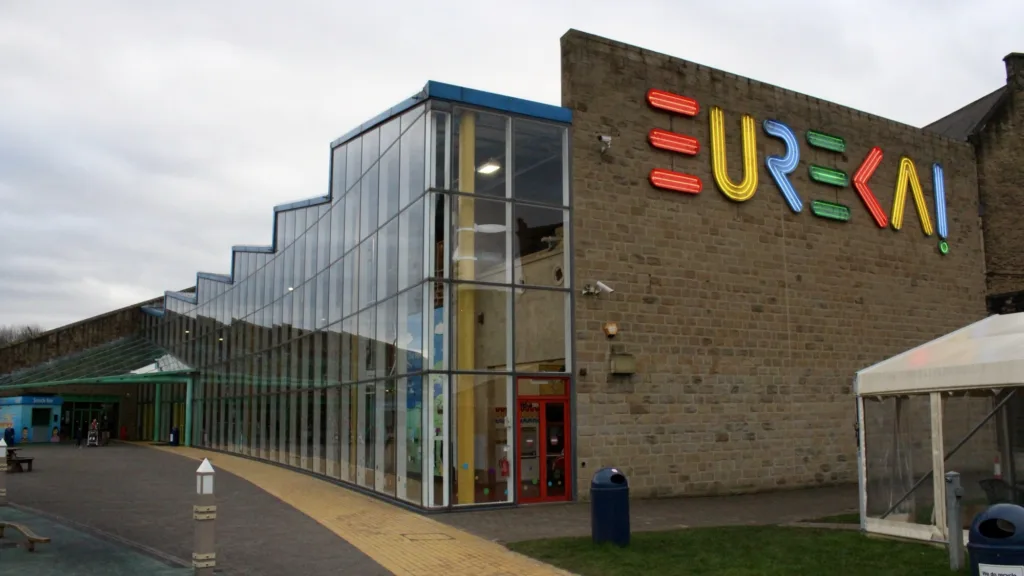
A photo of the Eureka National Childrens Museum in Halifax

Considering how often I pass Eureka, and the fact that we have a young child, it’s perhaps surprising that it’s been almost seven years since my last visit. And like that time, it was partly due to some Tesco Clubcard vouchers expiring. The museum hasn’t changed much in that time; the main difference was that the car garage is now a community area with a bus and a smaller electric car exhibit.

It’s still a good museum for half a day, and at eight years old our child isn’t too old for it. There’s a new Eureka, focussing more on science for slightly older kids, in Wirral which we need to visit at some point.

Royal Armouries, Leeds

A disarmed AK-47 rifle that has been covered in sprinkles and Love Hearts sweets

The last time we went to the Royal Armouries was for Thought Bubble, back in 2016. Museums about war and armour aren’t really my thing, but our eight-year-old had read a library book about them recently and so it was an opportunity to see some of those things in real life.

The Reloaded exhibition is interesting, as it looked at guns as gifts and objects of desire. There were also a couple of commissioned art pieces, such as an AK-47 covered with sprinkles and Love Hearts. It’s always fun to see the elephant armour too.

We have a few more busy weekends coming up, so I doubt we’ll be going anywhere else for a few weeks.

Crich Tramway Village

Tram

Back in May, on the way back from a wedding in Leicester, we dropped into Crich Tramway Village in Derbyshire. Crich is home to the National Tramway Museum, and has a large number of heritage trams from Britain and abroad that run up and down a mile long track.

At the lower end of the site is the village, with various heritage buildings that have been transplanted from elsewhere and re-assembled. There’s also the main tram sheds, for those trams that are still in working use, and a museum with some trams as static displays. The trams in the museum are arranged in date order, right from the first horse-drawn trams, to those that were built shortly before trams were withdrawn across almost all of the UK in the 1960s. Famously, Blackpool was a hold-out and kept its trams, and several examples are now here at Crich too. It was slightly weird seeing a tram that I’ve seen in service in Blackpool not too long ago, now in a museum.

Crich Tramway Village

Heading up the hill out of the village is a large park for kids to play in, and then a forest trail with various sculptures to look at. There’s even a wooden Mr Potato Head.

Entry to the site permits unlimited rides on the trams. The village has a variety of places to eat and drink; the pub on site was having a beer festival when we visited. And like many attractions, your entry fee gets you an annual pass, so that you can return any time within 12 months for free. Alas, it’s a little bit too far for a day trip for us so we may not be able to take advantage of a return visit unless we’re in the area for another reason.

Even if you’re not quite so interested in public transport as I am, it’s a good day out as there’s plenty to do. It helps if you choose a day with good weather, though, as it’s mostly outdoors.

Quarry Bank Mill

Quarry Bank Mill

Christine was working this weekend, and so, to keep our toddler entertained, we went to Quarry Bank, near Manchester Airport.

It’s a National Trust property, and is home to Quarry Bank Mill, a large, red-brick mill. Whilst it is still signposted as ‘Quarry Bank Mill’, the National Trust are spending a lot of money on other parts of the site as well. The mill is still the main draw – it’s big, and still has a lot of existing machinery inside. You enter at the top, and start with wooden looms and spinning wheels, before heading down to the mechanised machinery that were used in later years.

Quarry Bank Mill is also home to a very, very big water wheel. It’s still operational, but has been replaced by steam engines and electric power. Enthusiastic volunteers demonstrated the machines and explained how they work, making it feel more interactive than some industrial museums that I’ve previously visited (Leeds, Calderdale and Bradford).

A special exhibition at the top of the mill is based on Sir Tony Robinson’s book The Worst Children’s Jobs in History (sponsored link). Kids can practice shovelling (fake) horse poo, picking vegetables, sweeping chimneys and looking after babies (dolls). Our toddler loved this, and threw a bit of a tantrum when I had to extract the doll from them to move on. It’s on until the 10th September.

Quarry Bank Gardens

Gardens

Last year, the gardens at Quarry Bank were renovated and this was completed earlier this year. They’re home to some nice decorative planting, a kitchen garden and a newly-renovated glass house. You can even buy some of the produce for a donation. A new visitor centre will open later this year, improving access to the gardens.

Next year will see Quarry Bank House opened to the public for the first time, along with some mill workers houses.

We didn’t go to the Apprentice House, which is a separate guided tour. I didn’t think our toddler would enjoy it, but maybe we can go again when they’re older.

Quarry Bank Mill

Getting to Quarry Bank

Quarry Bank is near the village of Styal and is just to the south of Manchester Airport, so it’s relatively easy to get to. It took me about an hour to drive there from Sowerby Bridge, in light traffic.

As with all National Trust properties, members get in free. I’m a member, and under 5s get in free, so it didn’t cost anything for either of us to visit, but Christine isn’t. Had she come with us, it would’ve cost her £20. That being said, there’s a lot to see and do and it’s a full day out; I got there at 10:30 and left about 3pm, and didn’t do the Apprentice House. National Trust members will find it especially good value for money.

My photos from Sunday are on Flickr, as usual.

V&A Museum of Childhood

V&A Museum of Childhood

Not all of London’s museums are in the centre of the city. The East London suburb of Bethnal Green is home to the V&A Museum of Childhood, home to a wide range of toys from several decades.

Now that our 18-month-old is an easily-bored toddler, we felt that we needed to go to a museum that would keep them interested. Thankfully, a museum filled with toys fits the bill, especially during school holidays. It’s technically part of the Victoria and Albert Museum, but doesn’t focus on art and sculpture like its larger Kensington sister museum.

A lot of the toys are enclosed in big glass cabinets, but there are some interactive exhibits. The most popular of which was simply a big pile of differently sized cardboard boxes, perpetuating the oxymoron that children are sometimes more interested in the box than the toy inside. Upstairs there was a sandpit, and we arrived just in time for an interactive story-telling session.

Our 18-month-old also enjoyed the sensory exhibit, with bubble tubes and multi-coloured lights. Christine and I appreciated the range of toys, which included the very old and the quite new. At the back is a large display of dolls houses, lit up as if in a large night-time scene.

We didn’t have the time to see everything as we had to go to meet a friend in the afternoon, so we only had a fleeting glance at the upstairs exhibits (sandpit aside). There’s quite a good café in the central atrium of the museum, which seemed quite busy even before lunchtime.

Entry to the museum is free, and it’s just up the road from Bethnal Green tube station on the Central Line. The museum itself is fully accessible but the nearby tube station doesn’t have step free access. We brought Lizzie in her sling as we knew we’d struggle with a pushchair.

Going back to Eureka as an adult

A photo of the Eureka National Childrens Museum in Halifax

When I was a kid, I used to love going to Eureka, the national children’s museum in Halifax. I was eight years old when it opened in 1992, and so I was in the right age group to visit. I remember going with primary school at least once, and with my parents on other occasions.

Eureka turns 25 this year, and I took Lizzie along a few weeks ago. She’s been three times now – once with me, and twice with her mum. I took her because Christine was working that weekend, and we had a Tesco Clubcard Days Out voucher that was about to expire.

There are still quite a few bits of the museum there that I remember. I remember pedalling on a fixed bike, and seeing a skeleton appear doing the same motions. That’s still there, although the rest of the gallery around it is new. The SoundSpace gallery is new; Lizzie found this really stimulating with lots of sound and light. We also spent a little bit of time in Living and Working Together, and All About Me, but having arrived there after lunch on a Saturday there was only limited time.

When Eureka opened, it was almost unique in the level of interactivity offered. So many museums at the time locked their exhibits behind glass cases, and there would only be the occasional button to press. Eureka was different – you could play with just about everything. It was all about learning through play – a concept that it now applies to its nursery, which is consistently rated ‘Outstanding’ by Ofsted. Nowadays, many more museums have exhibits which are accessible to kids, but Eureka was pioneering in this respect.

Eureka entry prices

Although it’s a national museum, Eureka doesn’t receive any central government funding, hence the need to charge an entrance fee. Our local MP, Holly Lynch, has been campaigning to change this. Making it free would be fantastic for Halifax, as it could bring in many more visitors to the town. Work is already ongoing to better link the town centre and the Piece Hall with Eureka and the railway station.

As it stands, for a family of two adults and two children aged 3 or over, a day out at Eureka is almost £52. Whilst the tickets are then valid for unlimited repeat visits within the subsequent 12 months, it’s still a big initial outlay. And that doesn’t include food at the café, parking or travel. It would be great if the museum could become more accessible to those on lower incomes.

Eureka is still a fantastic museum for kids. Quite a lot has changed in 25 years and I’m pleased to see how it’s developed. But it was also nice to go back and see things that I remembered when I was younger. And now that we live nearby, we’ll be getting the most out of our annual passes.

The National Coal Mining Museum for England

National Coal Mining Museum for England

Yesterday I took our one-year-old to the National Coal Mining Museum for England, which is near Wakefield. Christine was working again and I’d heard that it was a good place to take kids of all ages. Plus, it had the advantage of it being free to enter.

The mining museum opened in the late 1980s, and became a national museum in 1995. You can read more about the history of the site on Wikipedia. However, this was my first ever visit. My parents never took me as a child, and I hadn’t been as an adult because we’ve not had a car until recently. It’s not very well-served by public transport – typically three buses an hour from Wakefield, 2 from Huddersfield and 1 from Dewsbury. But there is ample car parking, and it’s on the main A642 road.

The main attraction is the opportunity to go down the old Caphouse Colliery coal mine. Alas, you need to be at least five years old to do so. So, we’ll have to come back to do that sometime after 2020 when our one-year-old is old enough. Fortunately, there’s a playroom for the under-5s with a ball pit and soft play area. Collectively, this kept our one-year-old entertained for the best part of an hour.

National Coal Mining Museum for England

Two coal mines

The mining museum actually spans two pits – Caphouse, and Hope Pit, which is at the other end of the site. A narrow-gauge railway runs between the two, and on weekends you can get on board a small battery-powered train. Alternatively, it’s a quarter of a mile walk.

You can’t go down Hope Pit, but most of the surface buildings are open to have a look inside, and there are some information panels and interactive exhibits. However, there were no staff on hand to talk about the exhibits – and this is something I noticed generally across the day. It’s a big museum, but I feel it could be brought more to life with more staff.

National Coal Mining Museum for England

Living and working

The entrance to the mining museum includes a visitor centre, and galleries focussing on the human side of the mining industry. How people lived, and the impact of industrial action, with a particular focus on the Miners Strike of the 1980s. I was born during the strike, so was too young to remember it. The museum tries to take quite a neutral line on the dispute; though it covers the hardship that mining families faced, it explains the other side as well. As a national museum, I expect that it receives central government funding, so this perhaps isn’t so surprising. But it’s a different attitude to, say, the People’s History Museum in Manchester.

One thing I noticed about the other visitors was that I was one of the youngest adults there, despite being in my thirties. There were lots of kids there (including a birthday party group) but many were with their grandparents, whom I’m guessing may have worked down the mines in their heyday, or lived in mining communities. Coincidentally, Friday marked the first time that Britain’s energy needs were met without coal for 24 hours.

Stables

Outside, you can visit the stables where two pit ponies and a horse now live. Although horses were used in commercial mining right into the 1990s (something I learned on my visit), none of these three horses has ever worked down a mine. At one time, these would have pulled a Paddy Train up the side of the mining museum site. But said paddy train was lying rusting in a far corner of the site, along with its plaque commemorating its opening in 1990. Indeed, several parts of the site are part-derelict. Unfortunately, being a free museum means that it’s reliant on donations and public funding.

This aside, I think we both had a good day out. Discounting lunch in the café, which serves reasonable but expensive food, we spent about 3 hours there. Had we been able to go underground, I expect this would have been longer. I’m sure we’ll be back when Lizzie is older.

Planning a London trip

Westminster

In a couple of months time, Christine, our one-year-old and I are off down to that there London for three nights. Typically, we go to London once or twice a year.

Travelling down

Our last visit was in October, and we travelled down by car for the first time. This was because we went via Oxford, but also because of the logistics of managing a 10-month old baby on a train for three hours each way was daunting. Especially when you add in all of the extra paraphernalia that you need to haul around with a small baby. Last time, we had to take plenty of food, changes of clothes, nappies etc.

This time, our toddler will be approaching 18 months old, and so we’re going to attempt the train. We’ll do without a pushchair, as our toddler should still be small enough to carry in a sling, and can walk short distances now. And, apart from a few snacks, our toddler doesn’t need their own food, as they’re happy eating from regular menus now.

It’ll also be cheaper. Fuel and parking cost us around £60 last time, plus the pressure of driving. Christine hasn’t passed her test yet and I can’t supervise her, so I have to do all of the driving. By contrast, two standard class adult returns with a Two Together Railcard booked last month cost us just £41. And, we’ve accumulated enough Nectar points to get two £20 Virgin Trains East Coast vouchers, so we actually only paid £1. That’s cheaper than the Megabus.

Staying over

Booking well in advance also ensured a cheap hotel stay. When booking accommodation, my usual tactic is to check the major budget hotel chains one by one, and then an aggregator like Expedia or Lastminute.com (which are often not the cheapest). Typically, we end up staying in a hotel in the IHG group, as I’m an IHG Rewards member, but they didn’t come out cheapest this time.

As usual, we’re not staying in central London. London’s public transport is really good, and the cost of travelling a bit further out is usually much less than the price of a more central hotel room. This time, we’re staying near Kew, in south-west London.

London attractions

The hotel is handy for the London Museum of Water & Steam, which I’ve not heard of before but it looks interesting. It’s in an old pumping station, and now tells the history of London’s water supply. This will be the second London pumping station that we’ve visited, after going to Crossness in 2015. It looks like it’ll be good for kids – especially if it’s a nice day where Lizzie can play outside.

The Musical Museum is also nearby and we may visit, depending on time.

Further away is the Museum of London Docklands. We popped in for about an hour on our last visit, but were only able to see the gallery on the top floor, about slavery and the history of the area. So we’d like the see the rest of the museum, but also the special exhibition on the archaeology of Crossrail that runs until November.

The Hunterian Museum has been on our to-do list for some time. Sadly, it closes next month for a three year refurbishment, so it’ll be shut when we visit.

Seeing friends

We try to make time to see friends when we’re in London, and so, in addition to the above, we’ll plan to meet up if we can. There’s a lot to fit in to a three night stay but we’ll do our best.

A day out in Oxford and its museums

Oxford Museum of Natural History

Last month, Christine and I had a day out in Oxford. I have family who moved down to nearby Bicester from Yorkshire some years ago, and so we visited as a stopping-off point on the way to our week’s holiday in London.

My relatives kindly offered to look after our baby for an afternoon, giving Christine and I some time to ourselves, and the opportunity to visit the city. I’d last been there in the 1990s, coupled with a visit to Legoland Windsor, but Christine had never been before. She arranged to meet a friend for lunch, and then we hit the museums in the afternoon.

Oxford Museum of Natural History

Oxford Museum of Natural History

Oxford’s Museum of Natural History isn’t as big as the one in London, but it is also free to get in. The museum is part of the University of Oxford, and is home to various stuffed animals and preserved skeletons. One of its more famous exhibits is the Oxford Dodo, an incomplete dodo skeleton. It’s accompanied by a model showing what we think a dodo may have looked like.

The building is also interesting. Many of the supporting columns are made with different minerals (with labels), making the building a museum piece in itself.

A number of the exhibits can be touched, which makes a change from seeing endless glass cases. There are also a number of activities for kids during school holidays.

Pitt Rivers Museum

Pitt-Rivers Museum

Tagged onto the back of the Museum of Natural History is the Pitt Rivers Museum. We only had time to look around the ground floor but there was plenty to see. It houses a series of collections of objects, many of which were brought in from overseas and are sorted by theme. There are collections of pottery, death masks, shrunken heads (which were the inspiration for those used on the Knight Bus in the Harry Potter films), charms, weapons, musical instruments and lots more besides.

I’m sure you could visit multiple times and still see something new each time. This is despite the museum fitting into one, admittedly large, room.

As we were only in Oxford for one afternoon, we didn’t get chance to see much of the rest of the city centre. But we’ll probably go back again before long, especially for a return visit to G&D’s ice cream café.

A day out in Liverpool

Liverpool

A couple of weeks ago, Christine and I ended up with a Friday off work and no plans. So, on a whim, we decided to go to Liverpool.

In the past, we would have caught the train. It takes a couple of hours from Sowerby Bridge, with a change in Manchester. But we decided to drive this time, which proved to be quicker and (probably) cheaper. We decided to stay the night, and we could bring all of our seven-month-old’s paraphernalia in the car as well. We managed to get a room in the Holiday Inn Express in the Albert Dock, which was great. It’s located in one of the old warehouses, above what used to be the studio for This Morning on ITV. The rooms still have the brick barrel-vaulting and ironwork intact, bringing some character to an otherwise bog-standard budget hotel.

We last came to Liverpool in 2010. Back then, we spent a couple of days in the city, before catching the ferry to the Isle of Man. This was before the Museum of Liverpool had opened, so now that it is open and established, we popped in. The gallery about the Liverpool Overhead Railway most interested me, as you can imagine, but the rest of the museum was worth looking around too. It’s also home to several of the Superlambananas that were created for Liverpool’s European Capital of Culture event in 2008. There’s plenty about the history of the city, although some of the exhibits about Liverpool’s suburbs will be more of interest to locals than those visiting.

Liverpool

Liverpool is one of my favourite places to visit. The area around the Albert Dock is fantastic, as is the Liverpool One shopping centre – it’s a great example of a retail development that blends into the city, rather than dominating it. I’m sure we’ll be back again in a few years time.

Kate Lycett’s Lost Houses

Bankfield Museum

Running a stately home is a lot of work – you only have to watch shows like Downton Abbey to see why. (note: I have never watched Downton Abbey.) Organisations like The National Trust spend millions every year to keep their properties going. Not all houses are lucky enough to have someone maintain them and some have fallen into disrepair or been demolished.

With this in mind, artist Kate Lycett has painted a series of pieces called the Lost Houses of the South Pennines, which has gone on display in Halifax’s Bankfield Museum. All of the paintings are of houses and stately homes in Yorkshire which are no longer standing, such as Manor Heath in Halifax (now Manor Heath Park) or Horton Hall near Bradford.

What makes Kate’s paintings stand out is her attention to detail. All of the paintings show the houses as if they were still in their heydays – lights on, and with an almost ethereal glow, giving them life again. Gold leaf has been woven in to good effect.

Alongside each piece is a description of the house – who built it, what it was used for, and its ultimate fate. Photographs are also provided, as are Kate’s scrapbooks that she used during her research. Ironically for an exhibition at a Calderdale Council venue, many of those houses were demolished by its predecessor organisations. Dry rot seemed to be a major problem in several properties but I think money (or the lack thereof) has been the major factor in most of the houses’ demise.

We’ve visited twice – Christine and I were lucky to be invited to the opening night by a mutual friend of the artist, but we also popped in with my parents at the weekend. It looks like it’s been pleasingly popular.

All of the paintings are for sale by sealed auction bid, but you can also purchase limited numbered edition prints that are signed by the artist. These include the gold leaf that the originals have. The exhibition runs until early April, and is free to visit.