Jorvik Viking Centre

A screenshot of the home page of the Jorvik Viking Centre web site

Last week, we took our nine-year-old for their first visit to the Jorvik Viking Centre in York. Now I grew up in York, and so have been many times over the years, but the last time Christine and I went was in 2012.

Jorvik is undoubtedly one of York’s best known tourist attractions, having opened celebrated its 40th anniversary last year. However, I’m writing about it now because, until the 23rd February, Jorvik is dressed up for winter.

Recreation of Jorvik ride

The main part of Jorvik sees visitors sitting in carriages that move around a recreation of York, or ‘Jorvik’ as it was known in the time of the Vikings. The carriages seat six, and feature a commentary in multiple languages. This part takes around 15 minutes, and the carriages rotate to highlight different parts of the recreated city. The buildings are laid out roughly as they were found when the site was excavated in the 1970s.

Before you go on the ride, there’s a glass floor to walk over which has a recreation of that 1970s archaeological dig. Previously, the site had been a factory for Cravens Confectionery, a now defunct sweet and chocolate manufacturer (alongside Rowntrees, now part of NestlĂ©, and Terry’s, now part of Mondelez). Local planning rules in York mean that an archaeological dig must take place whenever foundations are to be dug, and this large site resulted in a five year excavation that unveiled many artefacts of York’s past. Indeed, once the ride has finished, you can view some of the finds that were excavated, and find out more about how the Vikings settled in York.

As mentioned, Jorvik has been dressed up for winter, so at present there’s snow on all the recreated buildings and on the ground. If you’ve been to Jorvik recently, maybe give it another visit as it looks very different at present. I didn’t take any photos on my visit this time unfortunately.

Accessibility

Jorvik is accessed down some stairs, although there is a lift. If you’re a wheelchair user, you’ll need to book in advance by phone (not online), as only one of the carriages has been adapted for a wheelchair and the staff will need to give you a specific timeslot. However, all the carriages offer a hearing loop for hearing aid users, and subtitles for the commentary. Famously, Jorvik recreates the smells of Viking York and this is worth being prepared for if you’re sensitive to unusual scents. There’s an extensive accessibility page on Jorvik’s web site, detailing what you can expect and how they can help you.

The days of there being massive queues for Jorvik snaking around the Coppergate Shopping Centre are mostly gone, as you now need to pre-book. You should do this online if you can; you can book on your phone on arrival, but be prepared to have to come back later. We turned up without pre-booking and had to return after 45 minutes. However, the following day, there were signs up saying that all time slots were booked up and no more bookings were being taken that day.
A Max card discount is available.

Bolling Hall Museum, Bradford

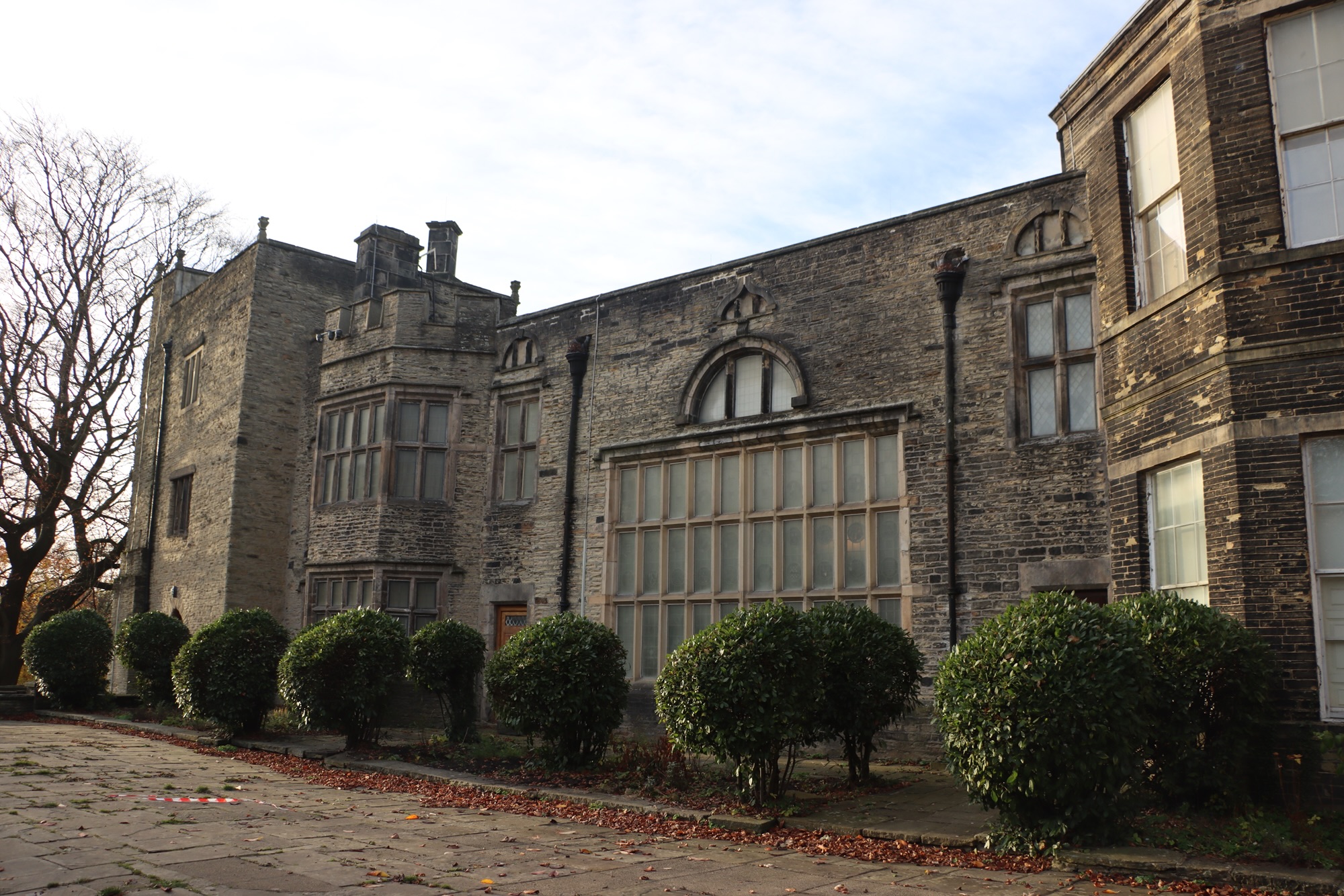
A photo of the outside of the Bolling Hall Museum in Bradford. It's a stone-built stately home.

Last month, we met up with a couple of friends to go to the Bolling Hall Museum in Bradford. Now, long time readers of this blog will know that I lived in Bradford between 2002 and 2010, and still work there, so surely I must have been here loads of times.

Nope. This was the first time I’ve been.

Bolling Hall is an old stately home that has been altered many times over the years. Parts of it date back to the 14th century, and in the early 20th century it was passed to what would eventually become Bradford Council, who run it as one of their museums. As various parts of the building date from different times, there is a variety of architectural styles on show.

Bolling Hall overlooks Bowling Park, to the south of the city centre, and is in what is now mostly the residential area of West Bowling.

A photo of a piano that belonged to Frederick Delius

Inside, the rooms have been mostly laid out as they would have been in Georgian times, including the kitchen and several bedrooms. There’s also a small exhibition about Bolling Hall’s role in the English Civil War; its owners at the time supported the Royalists, whereas the wider Bradford area backed the Parliamentarians.

As with most council-run museums, Bolling Hall is home to various objects in Bradford Council’s collection. This includes the first piano owned by Bradford-born composer Frederick Delius.

It’s not a big museum, and we spent about an hour there. Whilst there are gardens outside, these were mostly roped off when we went.

Amusingly, it was me who created its listing on Foursquare, thirteen years ago, so it was nice to be able to finally check in there.

Accessibility

Being a very old building that has been altered several times, accessibility is not great. If you’re unable to manage stairs, then you can use an accessible entrance to see some of the ground floor rooms, but there isn’t a lift and the upstairs rooms are on different levels.

Bolling Hall Museum is closed on Mondays and Tuesdays. Entry is free. Parking is available on site, and it’s well-signposted. It’s served by bus 635 from Bradford city centre.

The Museum of Liverpool

A photo of the outside of the Museum of Liverpool

So, after we caught the Ferry across the Mersey, we had a couple of hours in Liverpool before we needed to head back. And seeing as the Museum of Liverpool is right by the Gerry Marsden Ferry Terminal, we decided to pop in.

All three of us have been before, back in Summer 2016, and if you’re good at maths then you’ll be able to work out how old our eight-year-old was then. So whilst it wasn’t technically their first visit, it might as well have been.

Like the name of the museum suggests, it tells the history of Liverpool, starting at pre-historic times and up to the present day. Some of the exhibits may only be of interest to locals, where these focus on specific areas of Liverpool, but for the most part there’s something for those who only know Liverpool for The Beatles and football.

Railways

Of particular interest to me is the story of the Liverpool Overhead Railway, which used to snake its way past Liverpool’s dockyards along the waterfront. Built in 1893, it suffered extensive damage during the second world war and was demolished in the 1950s. But it was the world’s first elevated railway, one of the first electric railways at a time when steam engines ruled, and one of the first to use modern colour-light railway signalling. In the museum, the one surviving wooden railway carriage is available to look at, on a recreation of the metal structure that carried the railway.

A photo of the steam engine Lion inside the Museum of Liverpool

This carriage isn’t the only rail vehicle inside the museum, and a large part of the ground floor is home to the steam engine Lion. It was built in 1838 for the then relatively new Liverpool and Manchester Railway, which was the world’s first intercity railway, to haul freight.

Whilst entry to the museum is free, some special exhibitions charge. The current exhibition is the Holly Johnson story – Holly Johnson probably being best known as the lead singer of Frankie Goes To Hollywood. Which would have interested me but probably not our eight-year-old.

Accessibility

As mentioned, entry is free apart from some exhibitions. It’s closed on Mondays, unless it’s school holidays, but open every other day of the week.

Being a new-ish museum, Changing Places and gender-neutral toilets are available, and there are lifts to all floors. Sunday mornings are dedicated quiet times in the museum.

James Street station on Merseyrail is the closest and is around a 5 minute walk away; the main Liverpool Lime Street station is about 20 minutes walk. It’s also close to the ferry terminal, so if you’re driving, you could do what we do and park there, and then catch the ferry.

Visiting the ‘other’ Eureka in Wirral

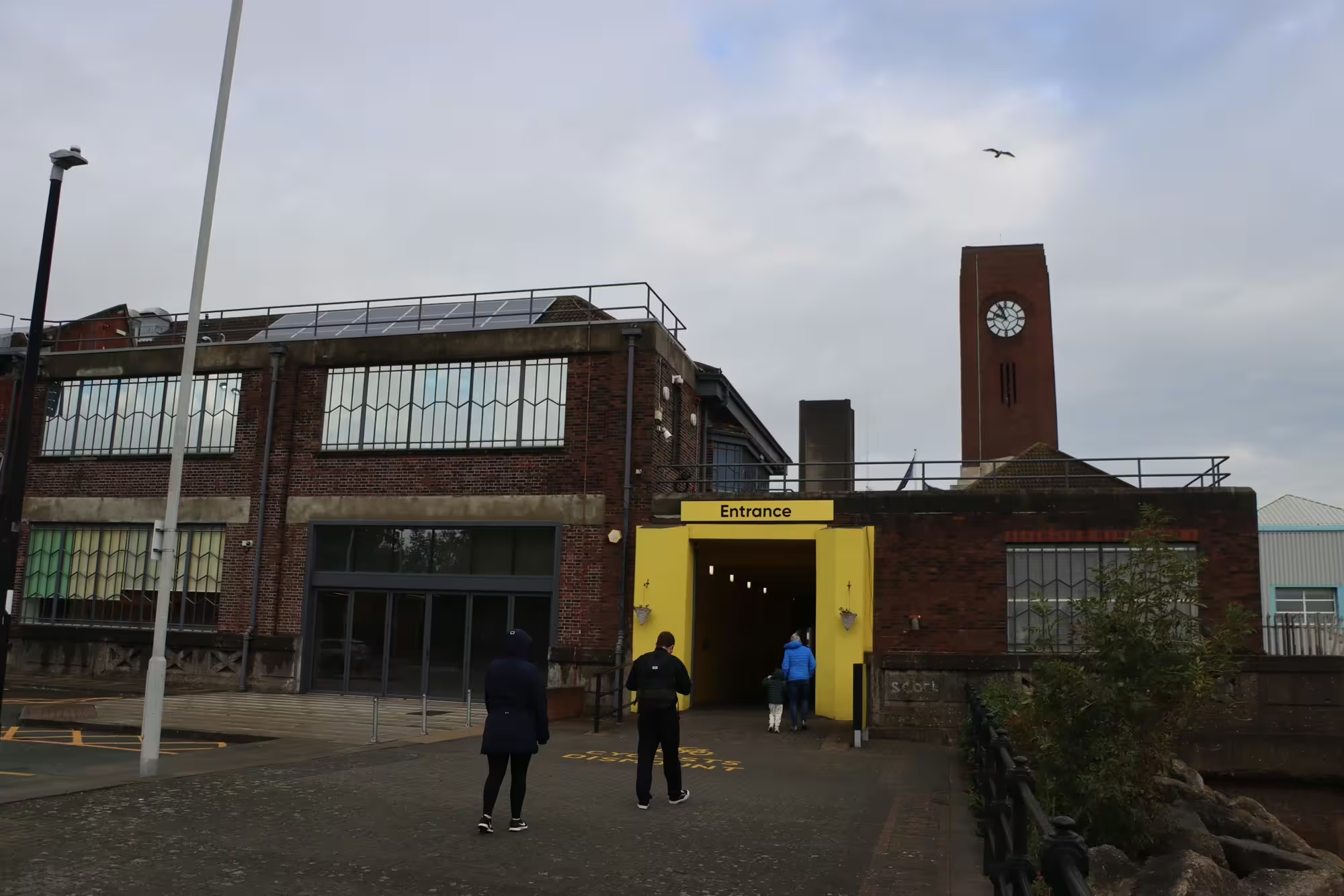
A photo of the entrance to Eureka Science + Discovery in Wirral

Since 1992, Halifax has been home to Eureka, the National Children’s Museum. But in 2022, a ‘new’ Eureka opened in Wirral, just across the River Mersey from Liverpool, and I took our eight-year-old to visit a couple of weeks ago.

As we live near Halifax, we’ve taken our eight-year-old to Eureka a few times over the years, so we wanted to see what the new museum was like.

Eureka Science + Discovery

The ‘new’ Eureka is branded ‘Eureka Science + Discovery’, and is aimed at slightly older children. The original Eureka was groundbreaking at the time of its opening by being very hands on, when most other contemporary museums locked their exhibits away inside glass cabinets with ‘do not touch’ signs everywhere. Eureka Science + Discovery carries on with the same ethos, and there’s lots of things to touch and interact with. But there’s also more to read, in line with its older target age group of 7-14 year-olds.

Downstairs, you can learn about the body, and there’s an auditorium at the back. Upstairs there are two zones – one focussing on nature, and the other about science, especially in the home. Through a separate entrance is The Burrow, which is a play area for the under-7s and is included in the ticket, and of course there’s a shop and a cafĂ© – again the cafĂ© has a separate entrance and is open to the public.

We spent a full morning at the museum. Older kids may get more out of it, if they take the time to read the displays, but allow 2-3 hours for a visit.

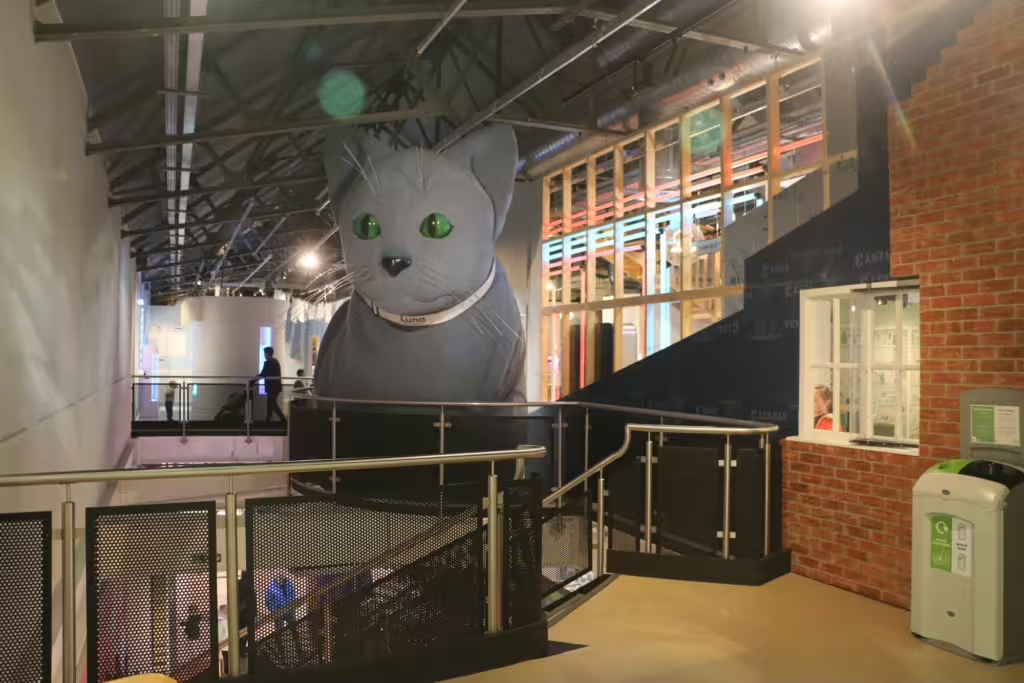
A photo of the inside of Eureka Science + Discovery. There is a very large blue cat.

Accessibility

Eureka Science + Discovery is based in the Seacombe ferry terminal in Wirral, and so you can catch a ferry across the Mersey to Liverpool and back. It’s a bit of a walk from the nearest Merseyrail station at Hamilton Square, but there are buses. There’s also a pay-and-display car park, although if you are driving and aren’t using Google Maps or the like, make sure you follow signs for the Seacombe ferry terminal. Although Eureka has been open a little while now, there aren’t any ‘brown signs’ yet for directions.

Being a brand new museum, accessibility is top-notch, with lifts and a changing places toilet. Extra support is also available for those with sensory issues.

Pre-booking of tickets is required, but then they’re valid as an annual pass. Whilst it’s not yet listed on the Max Card web site, if you have a Max Card, then one adult and one child get in absolutely free at present. Tesco Clubcard vouchers are also accepted but can’t be redeemed for an annual pass.

A return trip to the National Coal Mining Museum

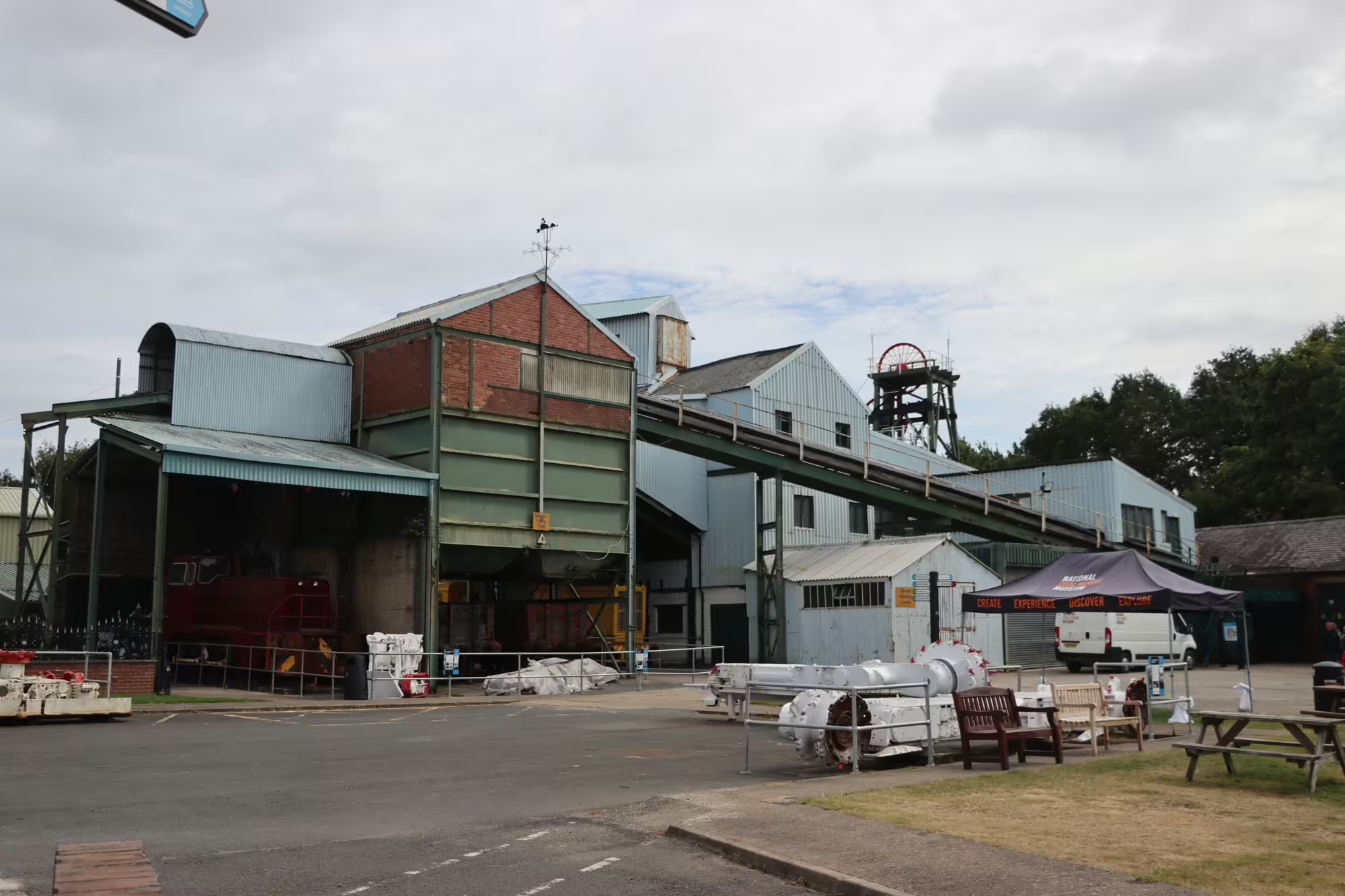
A photo of Caphouse Colliery at the National Coal Mining Museum for England.

Last weekend, I took our eight-year-old to the National Coal Mining Museum for England. It was our second visit, the first being in 2017 which I wrote about at the time. Our eight-year-old was only one then, and so we couldn’t go down the old mineshaft, but this time we could.

This is now the third mine that we’ve been down in as many months; last month, we went to the one in Beamish, and in May we went to the one in the Black Country Living Museum. Caphouse Colliery, the mine at the National Coal Mining Museum, is different as it’s primarily a deep mine, and so the tour enters and exits using a lift in a 140 metre deep mine shaft. There is a drift entrance to the mine as well, but it’s mainly there for emergency evacuations now and isn’t part of the tour.

Mining ceased at Caphouse in the 1980s and it became a museum shortly after. So, whereas Beamish and the BCLM are set in the early twentieth century, here the mine tour covers the full history from the early 1800s right up to the more mechanised latter times. Though coal is no longer mined here, the mine is still regulated as an active coal mine and all battery powered devices have to be surrendered before the tour – hearing aids being the only exception. As such, I don’t have any photos from down the mine.

Back on the surface, we had a look at the indoor exhibitions, about miners’ lives and a special exhibition marking forty years since the Miners’ Strike. Around the colliery, you can see the old steam engine that powered the lift mechanism, and the Pithead Baths, where miners would start and end their shifts with a communal shower. There was also a cage with some canaries – the literal canaries in a coalmine.

We then caught the narrow gauge paddy train which takes you to the other end of the site, where there are new stables for horses and ponies. Ponies were still used down coal mines as recently as 1994, and so when the museum opened, it served as retirement stables. Whilst the ponies there now are rescues, none of them have worked down a mine.

As it was the summer holidays, there were some additional activities on for kids. A large sandpit was outside the Hope Pit to recreate a beach; when miners eventually became eligible for a week’s paid holiday, thousands would go to various UK seaside resorts like Blackpool, Skegness and Cleethorpes.

We had a good time; in retrospect, I’m surprised it’s taken us so long to go back, as it’s only just over half an hour’s drive away.

Accessibility

The underground mine tour is mostly accessible to wheelchair users, but the no batteries rule applies. Some of the buildings aren’t accessible due to their age. There are accessible toilets but the nearest Changing Places toilet is a ten minute drive away. More information is available on the web site.

Parking is available on site; it’s normally free, but there’s a ÂŁ5 charge in summer (which in turn gives free use of the paddy train). There’s an hourly bus service between Wakefield and Huddersfield which calls at the museum.

Our 2024 holiday: Beamish

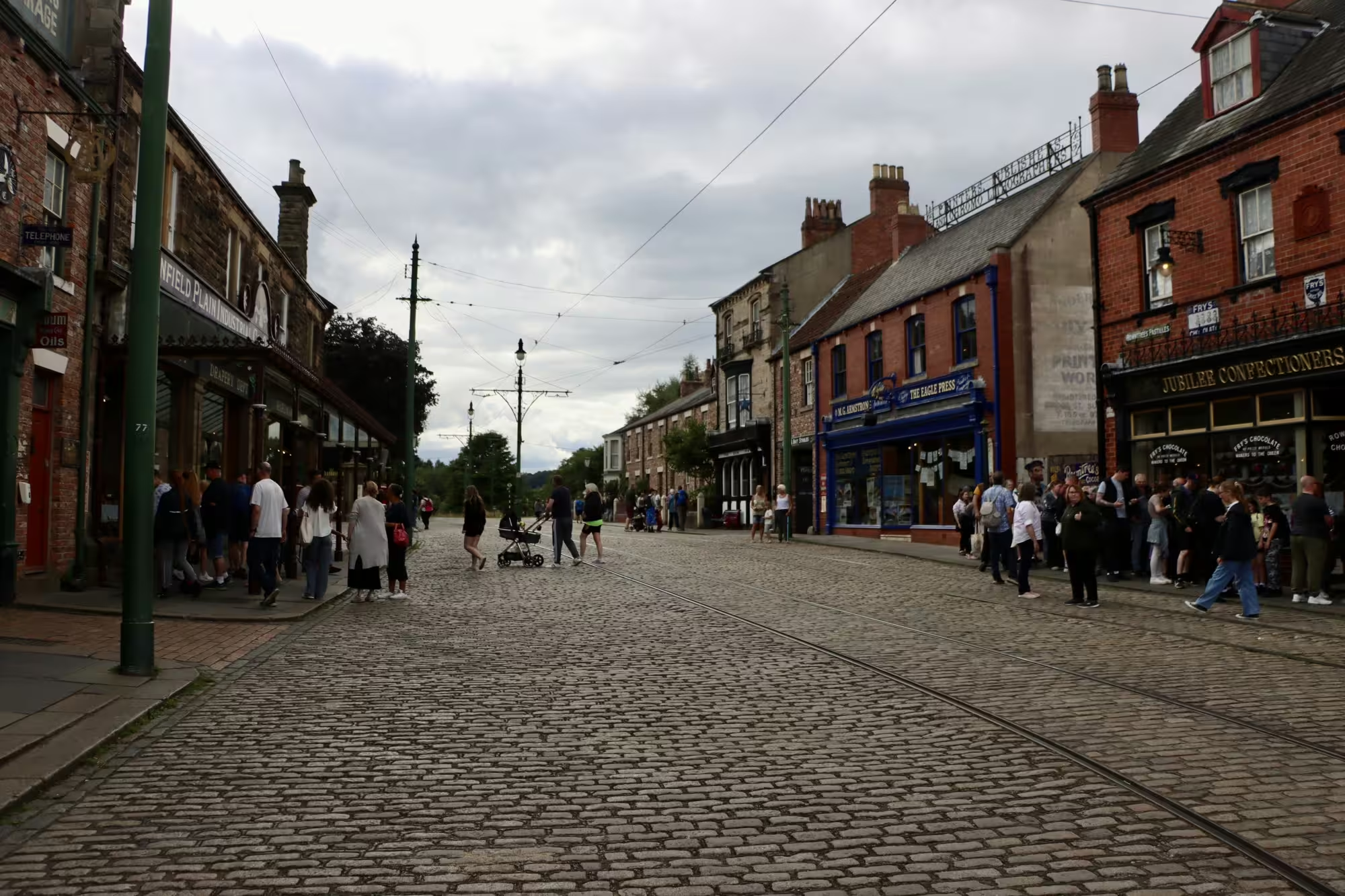
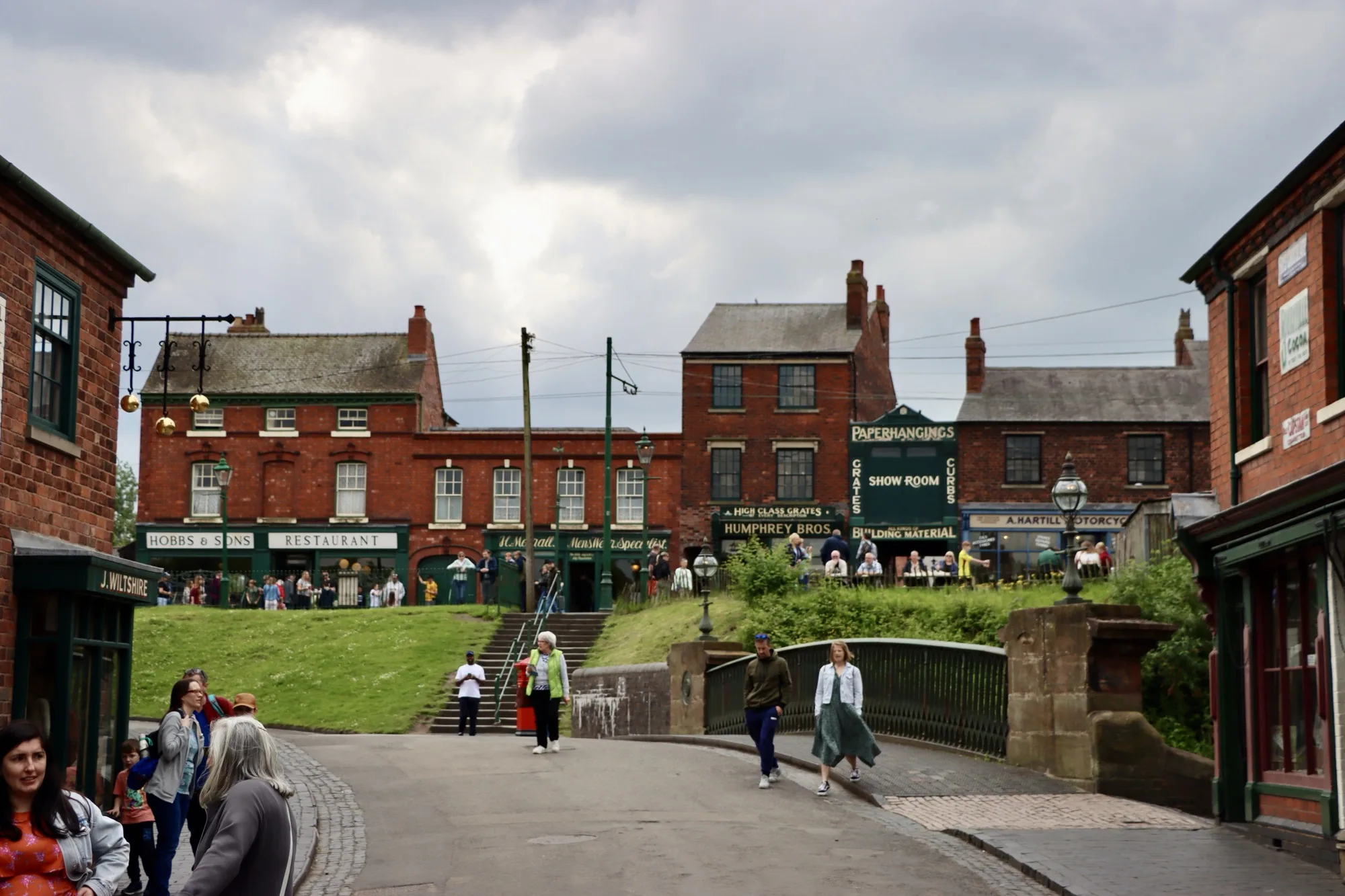
A photo of the main street in the 1900s town at Beamish

This is the eighth, and final, blog post about what we did on our 2024 holiday to Northumberland. Previously, I wrote about Cragside, and today is about our visit to Beamish.

‘Wait a minute’, you may be thinking, ‘Beamish isn’t in Northumberland’. And you would be right – Beamish is in County Durham. But we called in on the way home and so I’m counting it as part of the holiday.

Beamish is an outdoor, living museum – very similar to the Black Country Living Museum that we visited back in May. It’s split into different areas, each representing a different time period, from the 1820s through to the 1950s. I’ve been a few times, and all three of us last visited in 2019 for my 35th birthday.

Beamish is huge, and it’s now just about impossible to see everything in one day. So, as we’d been before, we strategised and focussed on visiting a few key areas that we wanted to see.

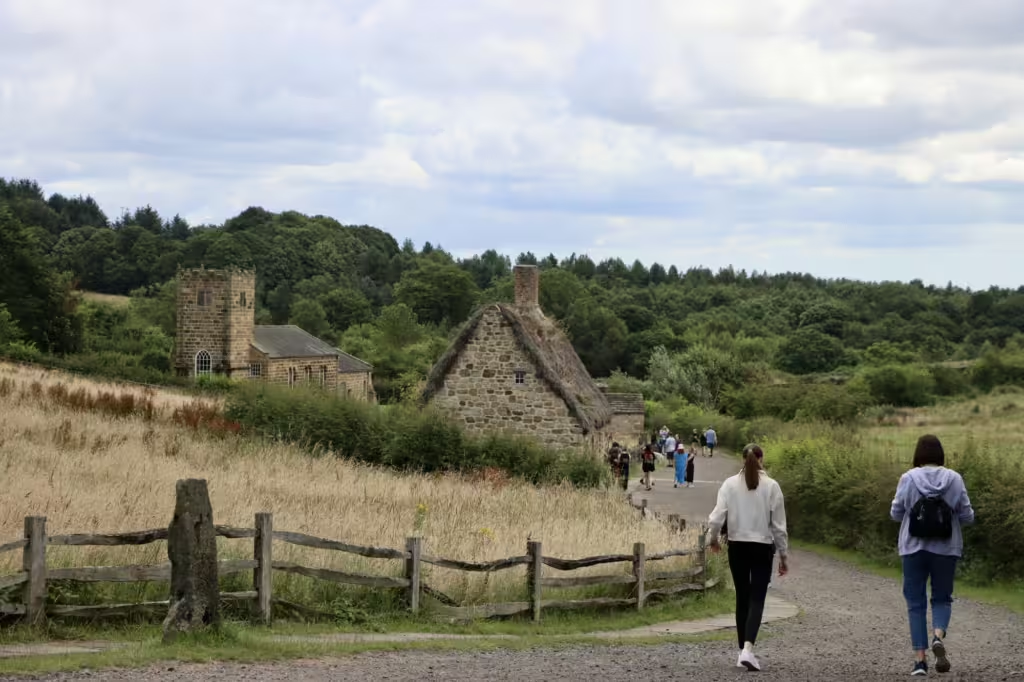
The 1820s landscape at Beamish. There is a thatched-roof cottage in the foreground

1820s Landscape

This is the area set 200 years ago, around Pockerley Old Hall, a farmhouse and one of the few buildings that was in situ and not rebuilt on the site. Elements of the farm have been there since the 15th century. At the farm, there are a few horses and pigs to see, and a brand new tavern where we had lunch.

This area is also is home to a waggonway, which was a predecessor to the railways and has a replica of Puffing Billy to haul visitors up and down a short section of track.

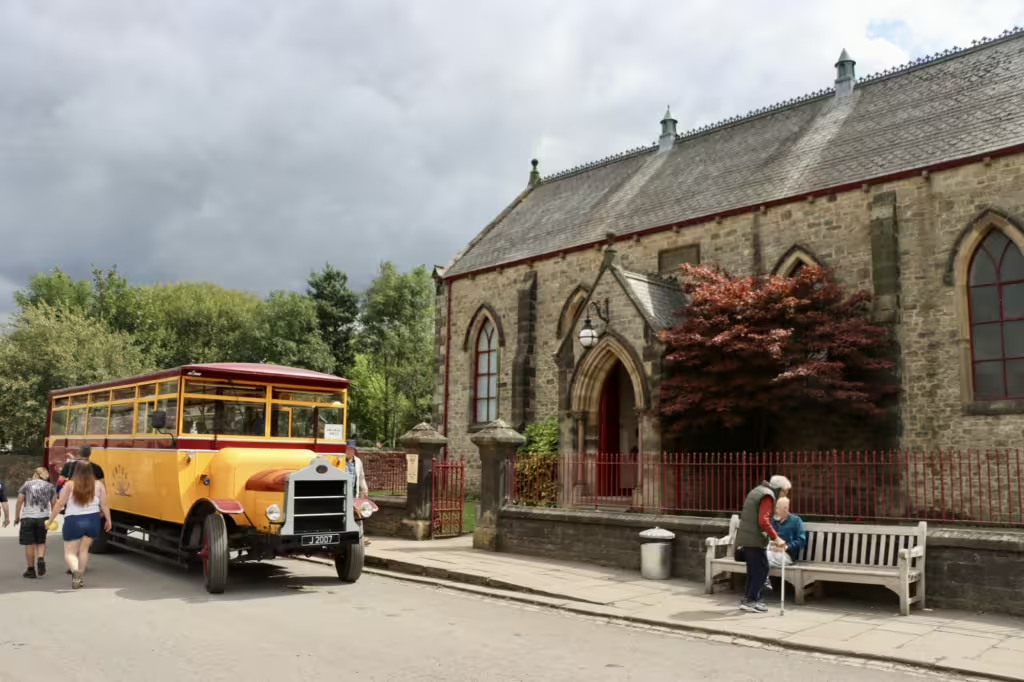
A old fashioned bus parked outside the church in the pit village at Beamish

1900s pit village

Jumping forward, and there’s the pit village – a small community around a coal mine, set around the peak period of coal production in the area. You can go down the Mahogany Drift Mine, which was a real mine – if you go down a closed off mine road and keep going you’ll end up about a mile away. The village shows how people lived – there’s a school, church and several miners’ cottages.

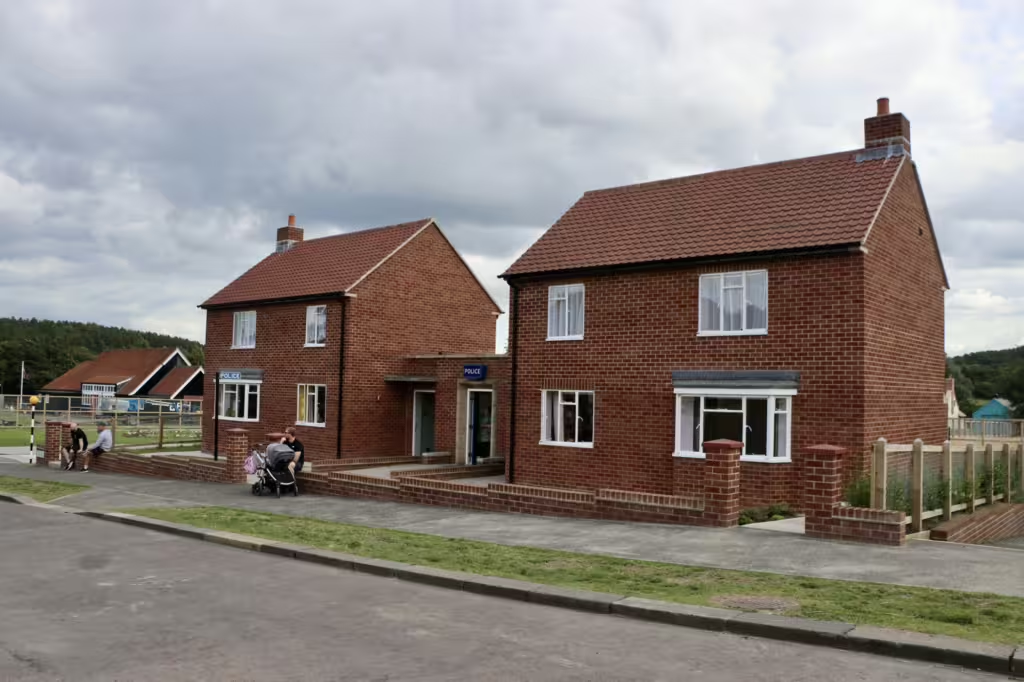
Two houses and a police station in the 1950s town at Beamish

1950s town

This bit was still being built when we last visited, and is now mostly complete. In a way, this felt like the oddest bit of the museum seeing as the houses are just like those that friends used to live in. You can go into the houses, and they have been decorated as they would have been when new. There’s also a playground and a high street with a toy shop, cinema and appliances shop. You can book to have your hair done in a 1950s style, and there’s a fish and chip shop.

It’s the first time in a while that a setting in Beamish reflects a time in living memory.

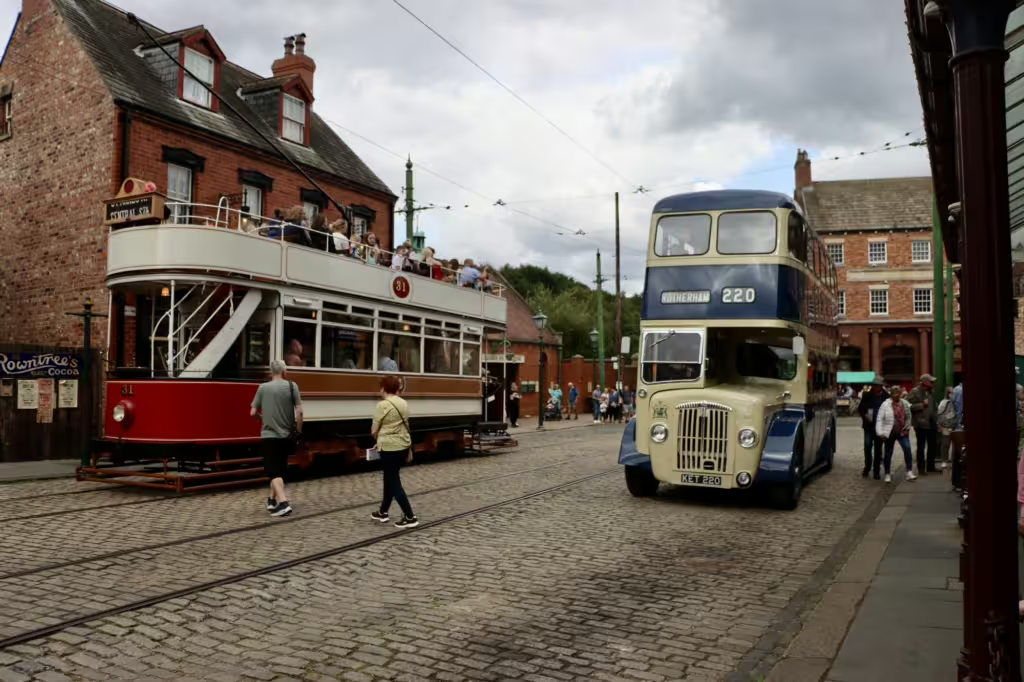
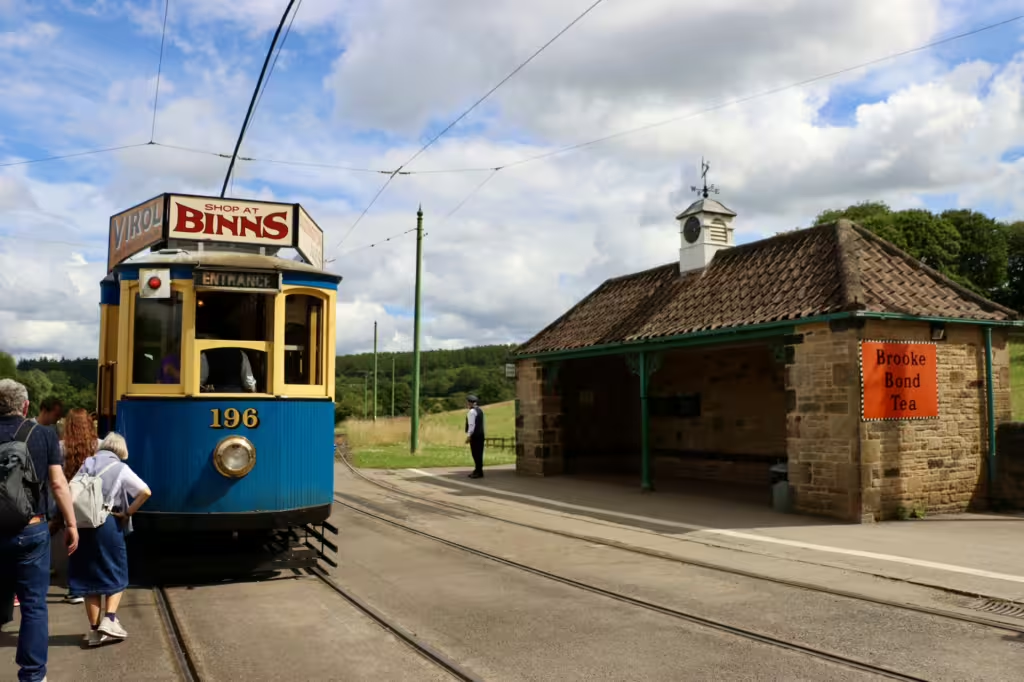
A tram and a bus in the 1900s town in Beamish

1900s town

Joined onto the 1950s town is the 1900s town, one of the older sections of Beamish and probably the most well-known. It’s expanded somewhat over the years and includes many transplanted buildings, including a bank, sweet shop, pub, co-operative store and a pharmacy. It’s certainly the busiest bit of the museum and the most complete.

This was all we had time to see – the weather was starting to turn, and we had a two hour drive home ahead of us, so we missed the 1940s home farm, the 1950s farm and the fairground.

A tram at Beamish

Getting around Beamish

Beamish is a large site, and unless you’re super fit, you’ll probably want to make use of the transport options provided. One of the things Beamish is known for is its tramway, which forms a circuit of the site and connects most (but not all) of the areas. At peak times, there are three trams in operation. They’re all heritage trams, although not all from the North-East of England – one is from Oorto, although painted as if it was from South Shields.

For the areas not reachable by tram – namely the 1900s Pit Village and the 1950s Town – there are a series of heritage buses running. These are all diesel, but there’s a plan to run electrically-powered trolleybuses into the 1950s town in future.

Wheelchair users can use a replica classic bus which has had a foldaway lift added at the back. It’s an on-call service reserved for those with mobility issues.

Accessibility

Accessibility at Beamish is pretty good, considering that there are lots of old buildings – you can tell that some thought has gone in to ensuring access where possible. But that doesn’t mean that every building is accessible, although the newest areas like the 1950s town are the most accessible. Indeed, the 1950s town is home to a Changing Places facility, and many of the buildings have lifts to access upper floors where needed. There’s an extensive accessibility guide on the web site.

Tickets for Beamish are valid from one year of purchase; as mentioned, it’s more than one day out and so you can visit as many times in the subsequent 364 days without paying again. At time of writing, tickets are around ÂŁ28 each for adults and ÂŁ17 for children. A Max Card discount is available on tickets bought on the day. However, I would recommend buying tickets in advance as we had to queue for quite a while to purchase them on arrival.

There are regular direct buses from Newcastle, Sunderland and Chester-le-Street. Chester-le-Street is also the nearest mainline railway station, served by regular Transpennine Express and occasional LNER and CrossCountry services. The bus services seemed well-used when we went, and drop you right outside the front entrance.

The Black Country Living Museum

A photo of a street scene inside the Black Country Living Museum in Dudley

Following our trip to Dudley Zoo and Castle, we went to the other major tourist attraction in Dudley: the Black Country Living Museum.

Those of us living in the North of England may be familiar with Beamish, which is a large, outdoor museum showing what life was like in the North East during various time periods. The Black Country Living Museum is very similar, but based in the Black Country. This is the area around Dudley, Sandwell, Walsall and Wolverhampton in the West Midlands, and probably gets its name from the mining and/or burning of coal.

Visitors can walk around various buildings that have been transplanted or recreated from the area. These include an array of shops – some of which sell things to buy – as well as a couple of pubs and fish and chip shops. There’s also a school where you can have a ‘lesson’ as if it were the 1950s, and a fairground. The museum also backs onto the Dudley Canal, and a cut from the canal goes through the museum.

Trolleybus

Transport

It’s quite a large site, and so there are transport options to get you from the visitor centre at the entrance into the recreated town. On the day we went, this was a classic diesel bus, but there’s also an electrically-powered trolleybus that was parked up. There’s a tram line as well, but this is currently out of use.

Mines

As mentioned, coal probably inspired the name of the Black Country, and so there are two mines on site. One is a deep mine, The Racecourse Colliery, and the other is a ‘drift mine’ which can be entered on foot. The latter is open for tours, although it’s a realistic simulation rather than a real mine. It does mean that it’s unlikely to collapse, but you’ll need to wear a hard hat as it includes low ceilings that would be typical in this type of mine.

There’s plenty to see, and I would advise going at a weekend when more events take place as we did. Like many attractions, your tickets are valid for one year after your visit, so we may go back another time to see some of the other demonstrations. As you would expect, the museum is also frequently used for filming shows such as Peaky Blinders.

As usual, you can view several more photos on Flickr.

Accessibility

The site is on a slope, and some powered wheelchairs may struggle in some places. Some buildings have narrow entranceways or steps, and the drift mine is uneven under foot. There is an accessible bus available if booked in advance. Some of the industrial exhibits may produce loud and unexpected noises.

The Cartoon Museum

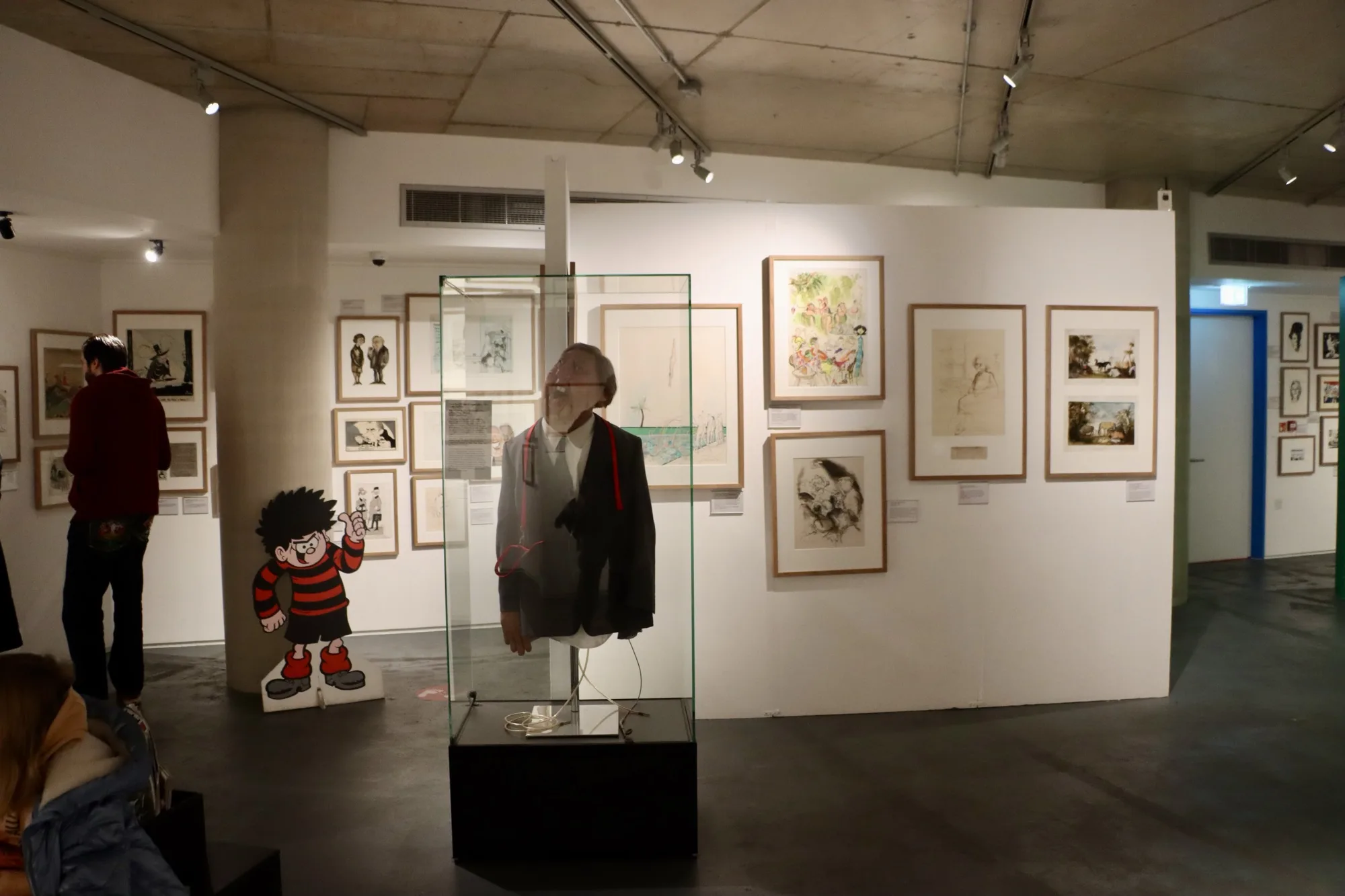
Inside the Cartoon Museum in London.

This is the fourth in the series of blog posts about places we went to in London – you can also read about the Bank of England Museum, the Cute exhibition at Somerset House, and the Young V&A.

On our last day in London, we went to the Cartoon Museum in Soho. It’s a relatively new museum, opening initially in 2006 and in its current location in 2019. It’s also quite small – allow a maximum of two hours – but with plenty to see. The walls are packed with illustrations going back a couple of hundred years, right up to now – the newest being Ben Jennings’ cartoon of Queen Elizabeth II taking the Elizabeth Line into the light when her death was announced in September 2022. It is mostly lots of pictures on walls, but there is a Spitting Image puppet on display as well.

At the moment, there’s a Wallace & Gromit exhibition, marking 30 years since the release of The Wrong Trousers. There’s several models on show, as well as some behind the scenes photos and some of the equipment used to film it. You can also see the actual Oscar that Nick Park won, although no photos are permitted of this. The exhibition is on until the 16th April.

A smaller exhibition shows the work of Oluwasegun Babatunde, a Nigerian comic artist who created a team of superheros based in Sub-Saharan Africa during the Covid-19 pandemic. This is on until the end of this month.

There’s also an activity room where you can create your own comic strips, and of course the ubiquitous shop.

Accessibility

The nearest tube stations to the Cartoon Museum are Oxford Circus and Tottenham Court Road. The museum is located in a basement, down a set of stairs, and sadly the lift has been broken since 2022. A recent crowdfunder to fit a new lift didn’t quite reach its goal but hopefully this will be fixed soon. Ear defenders and sensory backpacks are available to borrow once inside.

Young V&A

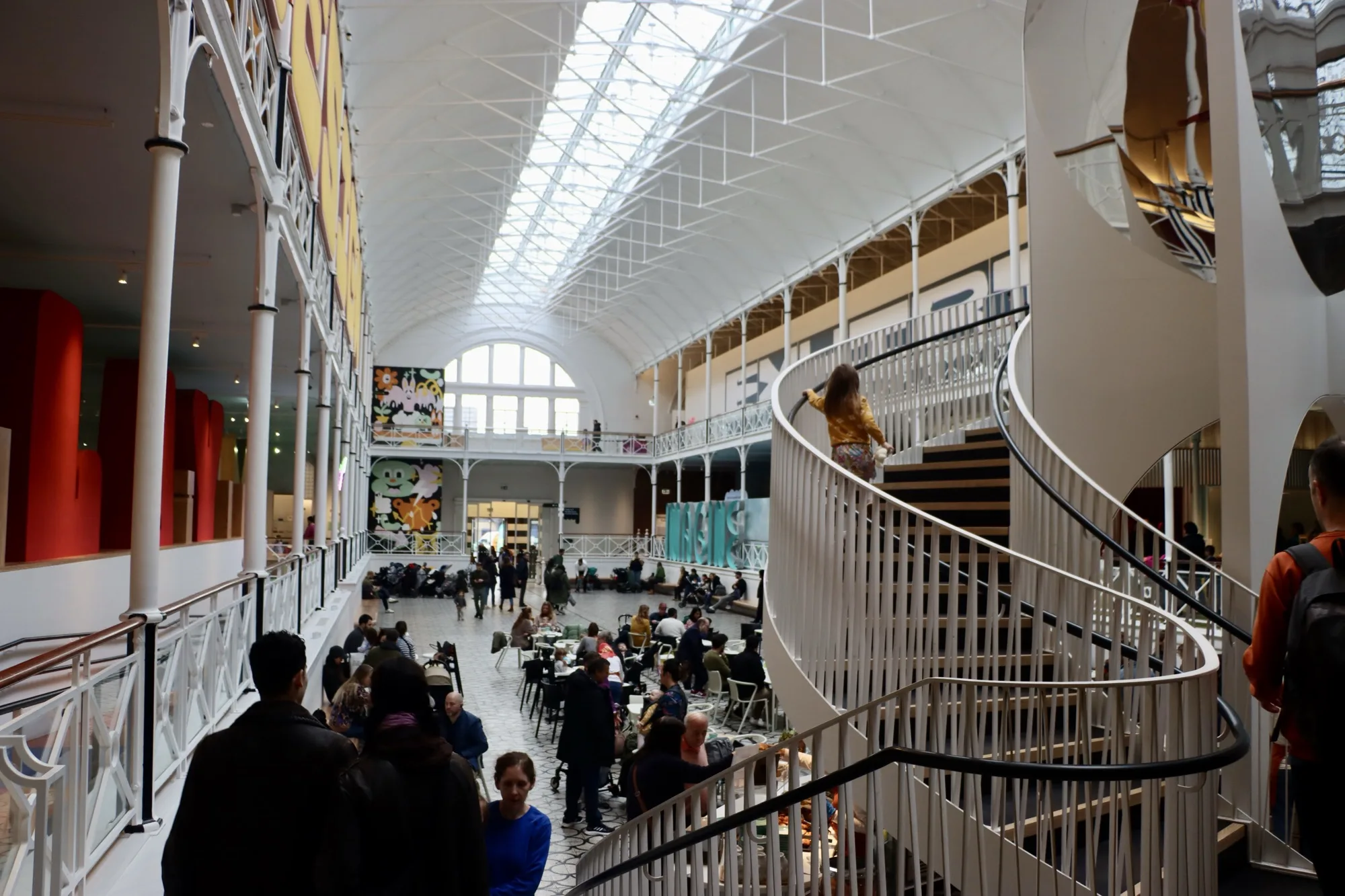
A photo of the interior of the Young V&A.

This is the third in the series of blog posts about places we went to in London – you can also read about the Bank of England Museum and the Cute exhibition at Somerset House.

The Young V&A is the new name for the V&A Museum of Childhood. It’s still in the same place, outside central London in Bethnal Green, but the new name reflects a complete refurbishment. We last went in 2017, and it’s changed massively since then. Before, it was very much a museum, with lots of objects in big glass cases and not much to interact with. Now, whilst there are still some objects to look at, it’s a much more interactive space, and somewhere to bring young children to play. Indeed, our eight-year-old was probably one of the older kids there. Dropping the ‘museum’ from the title therefore makes sense.

The gallery spaces have been split into themes – Play, Imagine and Design. Play arguably caters for the youngest children, although there’s a big screen with a playable Minecraft version of the museum (thankfully it resets regularly to discourage hogging). Imagine includes the dollhouse collection from before, and design looks at how products are designed. There’s a particular focus on recycling waste into useful furniture.

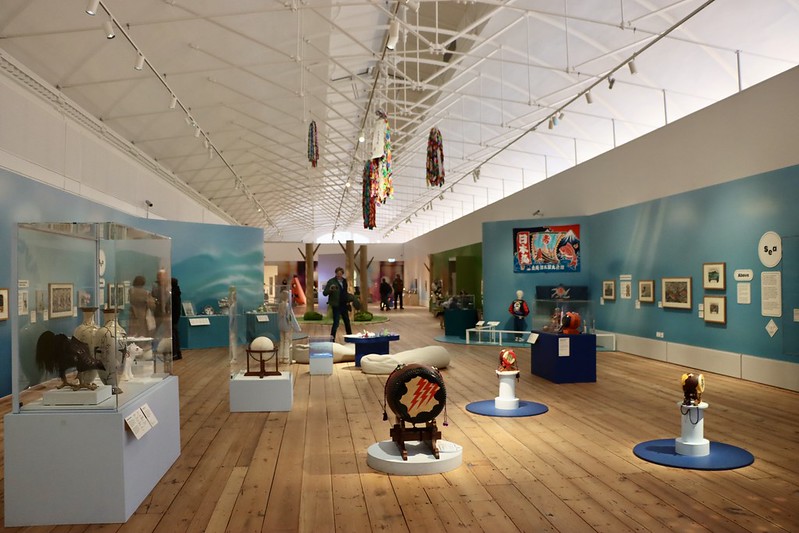
Japan: Myths to Manga

Japan: Myths and Manga

Then there’s an exhibition space, and the opening exhibition is called Japan: Myths to Manga. Whilst the main museum is free to enter, you have to pay to access the exhibition space, and tickets are limited. We made the mistake of not booking in advance, so when we were ready to visit the exhibition on a Saturday afternoon, no more tickets were left. So, we ended up booking tickets for the Sunday and came back the following day.

Personally, I concur with Ianvisits and found the exhibition a little under-whelming, but my wife and child seemed much more engaged. The exhibition is rather sparse, and I would have expected to see more objects there. However, I’m not in the target market for this and we did spend over an hour in the exhibition. There’s several clips from Studio Ghibli films to watch and plenty of Pokemon; but it was also good to read about the traditional Japanese stories and myths which inspired these works.

Accessibility

Because our hotel was located between Aldgate and Whitechapel, we caught the bus to the Young V&A, but it’s also a short walk from Bethnal Green tube station which is on the Central Line. It’s also not too far from Cambridge Heath station on the London Overground, on what will soon be known as the Weaver Line. Around the corner is the new permanent home of the Vagina Museum, although we didn’t have chance to visit this time around.

As you would expect from a recently-renovated museum, there is step free access everywhere, and there’s a dedicated quiet space in the Reading Room. Which we found quite welcome; although the renovation has been extensive, it’s a listed building and so there are limits. Any building popular with children is bound to be noisy, and the open space in the middle is quite echo-y.

Bank of England Museum

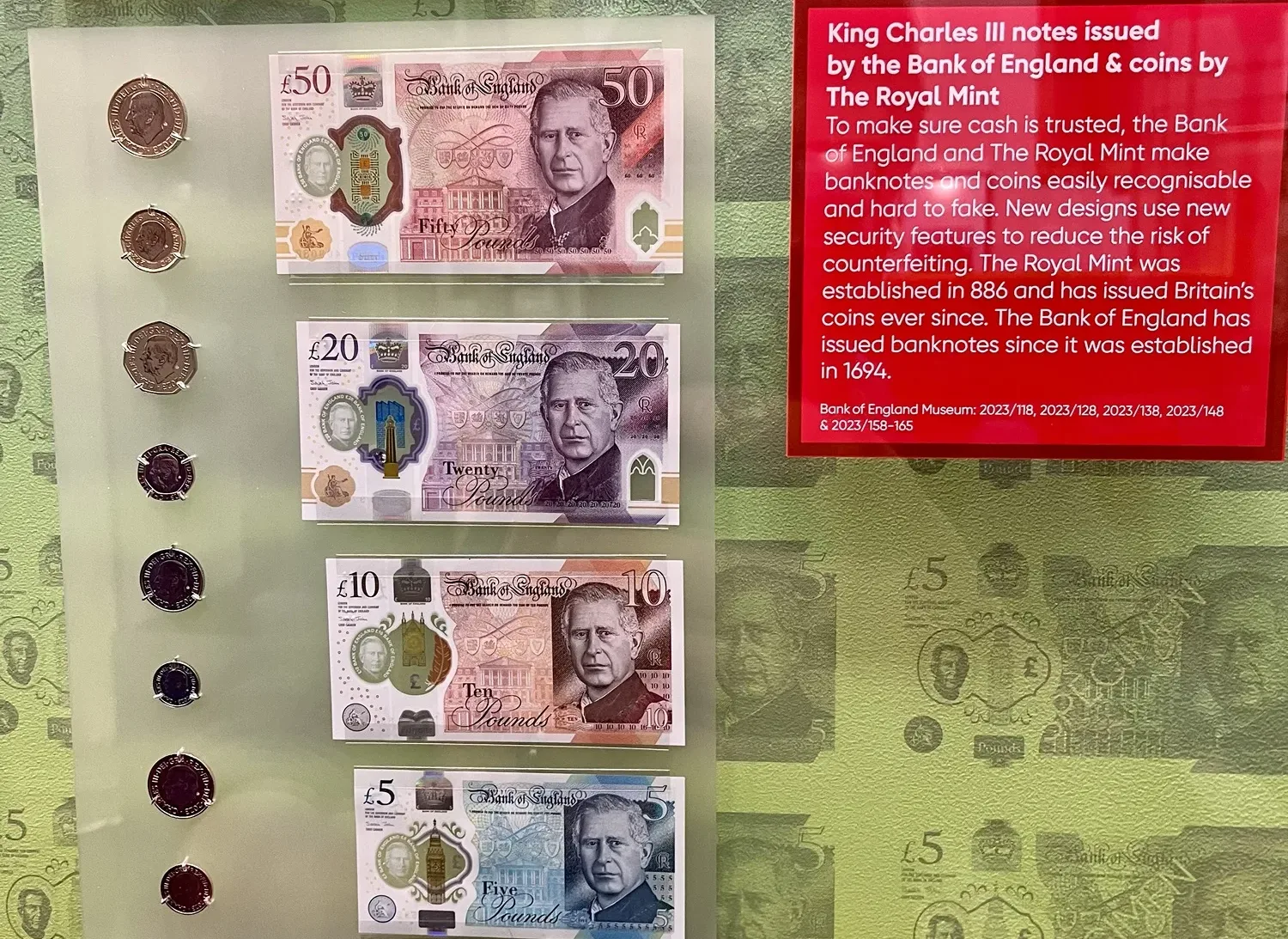
A photo of the new King Charles coins and bank notes at the Bank of England Museum in London

The first place we went to on our trip to London last weekend was the Bank of England Museum. Which is pretty much what you would expect it to be – a museum based at the Bank of England headquarters in the City of London. Access is via a side entrance, and, as you would expect, you have to go through a security scanner to get in.

This is only the second time that I have been to the Bank of England Museum. The first time was a long time ago. I can’t remember exactly when, but I was definitely still living at home, so probably 25-ish years ago. Part of the reason for this is that the museum is only open on weekdays, and we normally visit London at weekends. As we had the benefit of an extra day, we were able to visit last Friday.

It’s not a big museum – a typical visit will take 1-2 hours – but it’s free to get in. And the exhibits are regularly updated. As shown in the photo above, there are samples of the new coins and banknotes featuring King Charles III which are not yet in general circulation. I was also amused by the satirical FTX t-shirt in an exhibit about cryptocurrencies. These are in a new exhibition called The Future of Money, which opened a couple of days before we travelled and runs until next September.

Like many museums, the Bank of England Museum has also acknowledged the darker sides of its past. Recent new exhibits include copies of ledgers listing the names of slaves that came into the bank’s possession, and there’s a display about the Windrush generation. On arrival in the UK, many of those who travelled on the Empire Windrush to start new lives were denied access to traditional banks, and the museum has a series of panels on Pardner Hand to allow people to borrow or save money.

Other permanent exhibits include some examples of forged bank notes (including some introduced by the Nazis in the Second World War to de-stabilise the economy), and of course there’s plenty on the history of the bank.

If you haven’t been to the Bank of England Museum before, I’d recommend going. It’s not a full day out, but it’s free and there are some interactive elements for children.

Accessibility

Predictably, the nearest tube station is Bank, which has step-free access from the Northern and Waterloo & City Lines, and the DLR. There are steps in the museum, including at the entrance, however, security staff can escort those with mobility issues from the bank’s main entrance and ramps can be provided once inside. There isn’t a quiet room, but ear defenders are available to borrow.