Unblogged January

A photo of January's 'Wolf Moon', taken by me in Derbyshire

I didn’t do one of these in December, although I think anything that I would have written about went into the 2025 review. Instead, here’s what I got up to in January that didn’t merit a full blog post.

The Wolf Moon

That photo of the moon at the top isn’t a stock photo – I took it myself! A full moon in January is known as a ‘wolf moon‘, and the moon happened to be closer to the earth than average so it appeared much larger in the sky.

The photo was taken on my Canon EOS 90D DSLR camera, but I admit there was some luck involved. I used the pop-out screen to set the correct exposure automatically, rather than experiment with various settings. I didn’t even need to use a tripod, and that photo was the first and only one I took. It’s been minimally cropped and edited.

As for where I took the photo? Well, after visiting Hardwick Hall, we took a detour and went to the Chatsworth Farm Shop. That photo was taken in the car park – being out in the countryside meant there was less light pollution. It also meant that, as well as getting a fabulous moon photo, we also picked up some of Chatsworth’s excellent maple-cured bacon. Seriously, it is probably the best bacon we’ve ever tasted.

A return visit to NESM

Last April, we went to the National Emergency Services Museum in Sheffield. As the tickets automatically become an annual pass, earlier this month I went back there with our ten-year-old. On our previous visit, there had been a Steampunk event on (it looks like it’s returning this April) and so we never got to visit the top floor, or the police cells.

This visit was an opportunity to rectify that, and so we got to learn about HM Coastguard, the Royal National Lifeboat Institution (RNLI) and the Yorkshire Air Ambulance. There’s also a recreation of a multi-agency response, where different emergency services have to work together – in this instance, a car crash which requires the police, ambulance and fire & rescue services. The museum is fundraising for a much-needed extension and I hope it’s successful – it’s a fantastic little museum and clearly needs more space.

Also, we bought a Plague Ducktor in the gift shop.

A screenshot of our results from the RSPB Big Garden Birdwatch

Garden Birdwatch results

We took part in the RSPB Big Garden Birdwatch on Sunday morning, which happened to be really wet and dreary. Despite this, we managed to see around 14 birds – mostly sparrows, but also a couple of blackbirds and bluetits. We fleetingly saw a wagtail too, which wasn’t on the core list.

(not) Changing Mobile Network

My mobile phone contract came to an end this month, and so I used a Martin Lewis trick to request a Port Authority Code (PAC) to port my number to another provider. This resulted in my current provider giving me a better offer than their standard upgrade deals, so now I have almost three times more data each month for less money than I was paying before. And, I don’t have to switch to a different network. All the haggling was done via Live Chat too, so I didn’t even need to call someone.

A photo of a Star Wars themed Lego set at the Calder Valley Brick Show

The Calder Valley Brick Show

We popped into this year’s Calder Valley Brick Show in Mytholmroyd last weekend. It’s an annual show for amateur Lego builders to show off their creations. Some are based on standard sets – often the older sets from the 1980s and 1990s – whereas others are custom builds. There were quite a few Star Wars dioramas there, but there was a good mix. Next month, there’s Bricktastic at Manchester Central (what used to be G-Mex) which is a much bigger event, although it looks like a number of the sets we saw will be there too.

Thackray Museum of Medicine

A photo of the outside of the Thackray Museum of Medicine

A couple of weeks ago, we went to the Thackray Museum of Medicine in Leeds. It’s next to St James Hospital, and tells the history of medical care in the UK from the 18th century until the present day.

History of the Thackray Museum

The Thackray Museum first opened in 1997, so it’s just shy of its 30th anniversary. It gets its name from the pharmacist Charles Thackray, who opened a chemist shop in Leeds in 1902; over time, the company branched out into manufacturing medical devices such as replacement hips. The company’s archive, in the care of Charles Thackray’s grandson Paul, became the basis of the museum’s collection.

The building housing the museum pre-dates the hospital next door, and opened in 1861 as a workhouse. However, a medical wing was established, and it was requisitioned as a hospital during the first world war. It then remained in use as part of St James Hospital until 1990, when it was deemed no longer fit for modern medical use. However, by this time it had become Grade II listed, and so rather than demolish it, the building was converted for use as a museum.

This wasn’t our first trip to the Thackray Museum. I visited with my parents when I was still living in York, within a few years of it opening, and Christine and I visited some time in the early 2010s when we were living together. We also visited in 2022, as a family of three; this was our first visit following a major refurbishment that started just before the Covid-19 pandemic. So our visit this month was our fourth visit.

A view of Disease Street inside the Thackray Museum of Medicine

Inside the Thackray Museum

Whilst you can pick and choose the order in which you view each of the museum galleries, the recommended route is to start off with Disease Street. This is a recreation of a street in Leeds in the early nineteenth century, towards the start of the Industrial Revolution when large numbers of people moved into the cities to work. You can choose to follow the fate of a person who would have lived during that time, and would find out why diseases thrived in the filthy conditions that working people had to live in. The person we chose ended up dying of consumption (tuberculosis) aged just 27.

Opposite Disease Street is a recreation of an old operating theatre, from a time before anaesthesia. You can watch a recreation of an operation on a young girl having an amputation, following a factory accident. Or not; the room rightly comes with significant trigger warnings and certainly our ten-year-old wasn’t keen to watch. But, you can see why we still refer to such rooms in hospitals as ‘theatres’ as they were designed to accommodate lots of spectators.

Also downstairs is Disease Detectives, about microorganisms and their impact on our health. There’s quite a bit about our microbiome and how this is an emerging area of science that is updating our understanding of the role of bacteria.

A photo of the apothecary collection inside the Thackray Museum of Medicine

Upstairs

Christine’s favourite bit of the Thackray Museum is the apothecary shop, which has (probably) the world’s largest collection of ceramic apothecary jars. It explains the role of an apothecary, and how this evolved over time into the modern day Pharmacist. Outside, there used to be a jar of live leeches, but it wasn’t there when we visited this time.

The largest room upstairs is home to Cutting Edge, which shows some of the museum’s collection of medical equipment, and how this has changed over time. Something that the museum has always had is an ’empathy belly’, which is a wearable harness that simulates what it’s like to be pregnant. You can try it on yourself; it’s not the original one from 1997 but a newer one of a type used in current medical training.

Opposite is another large gallery called Normal and Me. This focusses on the stories of people who live with various disabilities or health problems, as well as ‘normal’ life stages such as puberty. It includes plenty of artwork by local artist Bobbie Rae, who we’ve met at Thought Bubble these past two times. To the side of this is an exhibition about medical car in war zones, and a section about sexual health.

Inclusivity

As you would expect from a museum that underwent a major renovation this decade, some effort has been put in to ensuring that the exhibits are inclusive. A description of a pregnancy test refers to ‘people with a uterus’, to include trans men and non-binary people who may want to see if they are pregnant, for example. And there are contributions from LGBTQ+ people, including those unfortunate enough to have experience conversion therapy.

Leeds is a diverse city, and its healthcare workforce especially so, and again, this is represented in the museum. It’s also very up-to-date, with several exhibits related to the Covid-19 pandemic, and recent medical advances.

Accessibility

Accessibility at the Thackray Museum is pretty good; despite it being an older building, there are wide doorways, a changing places toilet and sensory spaces. However, when we visited, the lift was broken.

The Thackray Museum is run by a charity, and there is some flexibility with the admissions prices depending on your circumstances and how generous you feel. You can therefore pay £9 per person, or more – there’s a £16 per person ticket which subsidises the £9 tickets for others. Under 7s get in free, as do holders of the National Art Pass and Max Cards.

There is some on-site parking, which is right outside the front entrance. It’s pay-and-display at £2 per hour, or you can pay on the PayByPhone app. A typical visit will be 2-4 hours; there’s a café, shop and a kid’s soft play area as well. The car park doesn’t offer electric vehicle charging, but there’s a Morrisons offering rapid charging a short drive away (CCS2 plugs only, no CHAdeMO).

As it’s next to St James Hospital, the museum is served by regular direct buses from Leeds Bus Station. If you arrive in Leeds by train, then the number 16 bus leaves from City Square, near the station, and drops you pretty much outside the museum. Otherwise, it’s a 45 minute walk from Leeds station.

York’s Chocolate Story

The photo of the outside of York's Chocolate Story

York, my city of birth, is known for a lot of historical things – the Romans, the Vikings, the medieval city walls and others. But it’s also known for chocolate, and was once home to three large confectionary companies: Rowntree’s, Terry’s and Cravens. And the story of York’s chocolate industry is the focus of one of its newer museums: York’s Chocolate Story.

Christine and I visited shortly after it opened, back before we got married, in 2012. Then, it was known as Chocolate: York’s Sweet Story, but its name has changed since. I hadn’t been back since – Christine had her hen do there – but last weekend I took our nine-year-old along.

Having visited Cadbury World earlier in the summer, it was good to compare the two. Cadbury World is a Merlin attraction, and so it’s more of an indoor theme park with some history. Meanwhile, York’s Chocolate Story, is primarily a museum, although both offer you chocolate samples to eat on your way around.

Inside York’s Chocolate Story

Guests follow a guided tour around the museum, although there are videos to watch as well. Whilst we waited for the rest of the group to come up in the lift, our knowledgeable guide asked everyone what their favourite chocolate bar was, and he was able to quickly look up when they first went on sale. It turns out that many chocolate bars have been around longer than we might expect.

The first room is about the ancient history of chocolate, and how Spanish colonialists ‘discovered’ it when they reached Mexico. At this point, you get to try a sample of the bitter chocolate drink that people would have drunk back then.

Next, we’re introduced to the aforementioned three confectionary businesses, and the people behind them. Of these, Rowntree’s still has a factory in York, but is now part of the massive Nestlé conglomerate. Terry’s are still making chocolate, but the York factory (close to where I went to secondary school) is now flats, with production shifted to Strasbourg. Whilst I’m old enough to remember Craven’s sweets, the company is no longer around.

Making chocolate

We then head downstairs, to find out more about how chocolate bars are made. This included a chance to make our own white chocolate lollipop, with a choice of flavours. They use white chocolate as it sets more quickly. We could also watch a demonstration where filled chocolate truffles were made, and of course we got samples to taste. The same room has a history of KitKats, and you can watch various classic KitKat TV adverts too.

All in all, it takes about an hour to get around. Of course, there’s a shop at the end which also does a range of hot chocolate.

Accessibility

Being a newer museum, accessibility is good – there’s a lift taking you to all floors. It’s in York city centre, around the corner from The Shambles, so within walking distance of the station. Whilst you can try to park your car in York city centre, please don’t – we saw loads of people queueing to get into car parks and blocking the roads whilst doing so, and besides, you’ll pay a small fortune. Instead, take one of the six Park and Ride services.

It’s best to book in advance – if you turn up on the day, all the tour slots may have gone or you may have to hang around for a while. Plus, there’s a 20% discount for booking in advance, and York residents get a 30% discount for visits on Sundays.

Kelham Island Museum

A photo of the Don Valley Engine at the Kelham Island Museum

If I had to guess where the Kelham Island Museum was, I’d probably suggest it was somewhere off the coast of northern England. It’s not – it’s in Sheffield city centre, and it’s a museum of Sheffield’s industrial history.

The Kelham Island Museum has been on my to-do list for several years. I seem to remember that, in the past, it was only open on weekdays, which made visiting difficult. Thankfully, it is now open at weekends, and so we went along last weekend for our first visit.

I like a good industrial museum, and the north of England is full of them. I’ve been to the ones in Manchester, Leeds, Halifax, Bradford, and I suppose the World of Glass in St Helens counts too. And whilst St Helens is known for its glass, Sheffield is know for its steel. So, you’ll find a lot of steel at the Kelham Island Museum – it’s home to the Hawley Tool Collection, which is the world’s largest collection of tools. What’s nice about the tool collection is that, whilst many items are on display, there are also pull-out drawers with plenty more to see if you’re so inclined.

The River Don Engine

If you visit at the right time on Thursdays through to Saturdays, you’ll get to see the River Don Engine powered up – it’s the photo you can see at the top. This is an absolute beast of a steam engine, and is currently the most powerful working steam engine in Europe. During its working life, it was, as you would expect, used for making steel. Its maximum output is around 12,000 horsepower, which is around 9 megawatts or the equivalent of 3 wind turbines at full speed.

Whilst it now lives in the Kelham Island Museum, the River Don Engine used to be elsewhere in Sheffield. Indeed, despite its massive size, it’s been moved twice in its lifetime. It last underwent restoration in 2007, when the museum was flooded, ironically, by the namesake River Don.

Kelham Island

The Kelham Island Museum gets its name from Kelham Island, an artificial island in the River Don dating back to the 12th Century. Back then, a mill race was constructed to power water mills. The museum itself is in what was originally an iron foundry, and later a power station for Sheffield’s first generation electric trams. The museum isn’t the only building on the island – there’s also student accommodation to serve Sheffield’s two large universities, and the Kelham Island Brewery.

It’s also worth noting the museum café, Joni, which does very good food – certainly way above average for a museum of its size. In fact, you may need to phone ahead and book a table on busy days. There’s also a pub, The Millowners Arms.

We visited in an afternoon, which wasn’t quite enough time to get around the whole museum, so it’s probably almost a full day out.

Accessibility

As mentioned above, Kelham Island Museum is in Sheffield city centre. There is limited on-site parking, which you need to pay for at a machine or on the RingGo app. Alternatively, it’s a five minute walk from Shalesmoor tram stop, or a 25 minute walk from Sheffield’s main railway station (so you may wish to consider the aforementioned tram).

Entrance is free, but donations are welcome. The museum shop is also great – especially if you or people you know like the local delicacy, Henderson’s Relish.

If you’re in a wheelchair or can’t handle stairs, then you should still be able to see most of the museum. Not all of the floors are flat. A lift is provided to the upper floors. The River Don Engine, when it’s in steam, is particularly noisy.

The World of Glass

A photo of the entrance to The World of Glass in St Helens

Until a few weeks ago, I wasn’t aware that there was a museum dedicated to glass in St Helens. But Diamond Geezer recently visited on one of his non-London gadabouts, and so I took our nine-year-old along to The World of Glass last month.

The World of Glass opened in 2000, and fulfils several roles as a museum. Obviously, the focus is on glass, and so there’s a history of glassmaking starting with the ancient Egyptians through to the present day. In particular, it focusses on glassmaking in St Helens – the location of the museum is no accident. If your house has windows made by Pilkington Glass, then St Helens is where the company was founded. And, as the town’s main museum, it also covers the history of the town, especially during the Industrial Revolution. It’s also home to the St Helens central library.

Entry to the museum is through an original brick cone, used for glass making and designed to draw cool air in from the bottom. This features an art installation by Johnny Vegas – yes, that Johnny Vegas – who is local to the area.

Inside the museum

Though this is its 25th year, it’s clearly had some updates to its exhibits since then. I think it manages to strike a good balance between things in glass cabinets, and interactive exhibits to keep kids entertained. Certainly, our nine-year-old enjoyed learning about fibre-optic communications, and the various light and colour mixing activities. Its star attraction is a chandelier that was salvaged from Manchester Airport during a refurbishment, made of hundreds of hand-blown Venetian glass tubes.

As well as the main exhibition, there’s an art gallery in the main building. Then, there’s a bridge over the Sankey Canal to the Tank House, which is the proper old bit. This is the remains of an original glassmaking furnace, used by Pilkingtons. Much of it had been filled in with rubble, and had to be dug out by archaeologists. You get to go down into the tunnels (hard hats available) to see inside the furnace. Incidentally, the bit of the canal next to the Tank House was known as ‘The Hotties’ because the water used to cool the furnace would be pumped out here, warming the canal water. There are photos of it being used for bathing.

We visited on a Sunday, which meant that we didn’t get to see a glass-blowing demonstration. These take place on other days of the week, usually at 12pm and 2pm. Whereas the museum itself has free entry, this is a paid-for addon.

In all, we spent a couple of hours at The World of Glass. If you stop to look at everything, you could probably eke out another half an hour, plus the time for the glass-blowing. There is also a café, although the menu was very limited when we visited.

Accessibility

As mentioned, entrance is free, though donations are welcome. As befits a museum of its age, accessibility is pretty good, although the Tank House tunnels are a confined space. It’s on two floors with a lift available.

There’s a small pay and display car park on site, which is free on Sundays and Bank Holidays. It’s also a very short walk from St Helens Central station, which has direct trains from Liverpool, Wigan, Preston and Blackpool. St Helens bus station is a little further, but still within walking distance.

Operation Ouch: Brains, Bogies and You

Our family of three appearing as skeletons at the Operation Ouch: Brains Bogeys and You exhibition

Last weekend, we made a return visit to the Science & Industry Museum in Manchester, to see the Operation Ouch: Brains, Bogies and You exhibition. This is the second consecutive Operation Ouch exhibition at the museum; last year, they had ‘Food, Poo and You’ which we visited in January. Twice in fact, as the first time I went with our (then) eight-year-old, and so we visited again a few weeks later as a family of three.

For those without kids (or grandchildren) in the 7-14 years old age range, Operation Ouch is a CBBC TV show hosted by twin doctors Dr Xand and Dr Chris, and in later series, joined by Dr Ronx who is probably one of the most visible non-binary people in UK children’s’ TV. Dr Chris is also the author of the book ‘Ultra-processed People’, which I reviewed back in 2023. As you would expect from a BBC series, Operation Ouch aims to inform, educate and entertain (the three principles on which the BBC was founded), so as well as teaching kids about science, it’s designed to be entertaining and disgusting too.

Inside Dr Xand’s head

The exhibition therefore follows a similar style. The idea is that you are shrunk down at the start, and enter a reluctant Dr Chris’ ear, where you can then enter different parts of his head to see how they work. There’s the brain, eyes, nose, ears, mouth, and a section on touch to cover all five senses. Unlike the previous exhibition, which was a linear journey through the digestive system, the layout is more free-form, with links between the sections and back to the core brain section.

Because it’s aimed at kids, the exhibition has lots of interactive elements. We particularly liked the screen which monitors your movement and displays an image of you as a skeleton. In the eyes section, there’s some optical illusions to try out, and, as someone with hearing loss, I appreciated the ears section too. Here, you could see how cochlear implants work; I don’t have one yet, but might need one in future. There’s also a demonstration of how your hearing changes over time, as you lose your ability to hear certain frequencies. Our nine-year-old could hear everything, Christine could hear two of them and I could only hear one, even when using the telecoil through my hearing aids.

In all, we spent about an hour in the exhibition, but could have spent longer.

Elsewhere in the museum

Having only visited last year, we mainly just came to see the exhibition. In recent years, there hasn’t been much of the museum available to see; of the five buildings that used to make up the museum, only one (the New Warehouse) has been open. The Air and Space Hall permanently closed in 2021; this was across the road from the rest of the museum and is now in use as a co-working space. The 1830s buildings, consisting of a warehouse and the original Manchester Liverpool Road railway station, are also closed for refurbishment, and due to re-open in 2030 for their 200th anniversary.

The good news is that The Power Hall has re-opened, as of Friday last week. We’ll plan to visit next year, when the next exhibition is on.

Accessibility

The Science and Industry Museum as a whole is pretty good for accessibility, and this extends to the Operation Ouch exhibition. All video content has subtitles and BSL interpretation, and any audio content that you can listen to includes a telecoil system for hearing aid users. The exhibition is all on one level.

Whilst the museum as a whole is free to enter (donations welcome), the Operation Ouch exhibition is a paid-for addon. Essential carers can get a free ticket when purchased with a regular-priced ticket.

The only on-site parking is for Blue Badge holders. There are various smaller pay-and-display car parks nearby, if you don’t mind parking under an unlit railway arch. Alternatively, there’s a multi-storey NCP car park at the Great Northern Warehouse, which is expensive but probably safer and more secure. This is a short walk away.

The nearest railway station and tram stop is Deansgate-Castlefield, which is reachable from literally every other Metrolink stop. There’s a lift down to street level at the tram stop, and then it’s only a short walk to the museum.

The Cat That Slept for a Thousand Years

A photo of The Cat That Slept for a Thousand Years

Whilst I’m not quite done writing about our holiday in Wales, I’m going to squeeze this blog post in here because it’s about a special exhibition which closes a week on Sunday: The Cat That Slept for a Thousand Years at the Manchester Museum.

Fundamentally, it’s just a giant inflatable cat – there’s (someone else’s) small child in my photo above for scale. It’s illuminated, and its tail and ears twitch every now and again. The room it’s in has low lighting, and soothing background music. And yes, you’re welcome to touch the giant cat. It’s like a huge sensory room.

In addition to this, there are some feline objects from the museum’s collection alongside, and before you enter the space with the cat, there’s a fictional short film about how the cat was ‘found’ by scientists in the Antarctic.

It’s a bit of fun, and I imagine younger kids, and those with additional needs who respond well to soothing sensory environments, will love it. The exhibition, like the rest of the museum, is free, but donations are welcome and you do need to book a timed ticket to manage crowds. It wouldn’t be much of a sensory space if everyone piled in there all at once.

The rest of the Manchester Museum

If Swarm is correct, then this was our seventh visit to the Manchester Museum – and yet, as far as I’m aware, I’ve never blogged about any of our six previous visits. Which is a shame, as it’s one of our favourite museums, and a worthy winner of this year’s European Museum of the Year prize.

Like Jodrell Bank, it’s part of the University of Manchester, and has been open since 1867. More recently, it re-opened in February 2023, after an 18 month closure. This saw the opening of a new exhibition space (where the giant cat currently is) and several additional permanent galleries. It’s also actively involved in repatriations of some of the artefacts in its collections to the communities and societies where they belong. Whilst we were there, visitors were encouraged to contribute to a consultation about the display of an Egyptian mummy, and whether it’s still appropriate to display human remains in this way nowadays.

Our favourite bit is the Vivarium, which is the only part of the museum with live animals – namely frogs and lizards. The live collections originate from the university’s zoology department, and the museum is involved in breeding programmes for rare species of frogs. There’s more in the Manchester Frog Blog.

Accessibility

Though housed in a late 19th Century building, the Manchester Museum has, as mentioned, had a number of refurbishments in recent years, and it tries hard to be as accessible as possible. Though it’s on multiple floors, there are lifts and stairs can be avoided. Wheelchairs are available to hire.

It’s a short walk from Manchester Oxford Road station, along, appropriately enough, Oxford Road. It is, however, some way away from the nearest tram stop (St Peters Square) but there are plenty of buses that pass right outside the entrance. For car parking, the University of Manchester’s Car Park D is a short walk – it’s a multi-storey with almost 1000 spaces, including 8 for electric vehicle charging (both medium 7 kW Type 2 chargers and some rapid chargers).

As mentioned above, entry to the Manchester Museum is free, but donations are welcome.

National Emergency Services Museum

A photo of some old fire engines at the National Emergency Services Museum in Sheffield

The weekend before Easter, we went to the National Emergency Services Museum in Sheffield. It’s a place we’ve been past a few times and so it’s been on our to-do list for a while, but this was our first visit.

The museum is housed in what was originally rare example of a combined police, ambulance and fire station, which opened in 1900. Over time, the various services outgrew the building and by the time it closed in 1965 only the police remained. The museum first opened in the year of my birth, 1984, originally just as fire service museum. It became a fire and police museum in 1991, and adopted its current name of the National Emergency Services Museum in 2015 following an extensive refurbishment.

Whilst the building is rather small, there’s a lot packed in there. It’s spread over three floors, with a yard at the back that houses a full-sized lifeboat and an Embrace ambulance. Inside, there are a number of police vehicles, ambulances and firefighting equipment, and you can also go inside some of the old police cells. Upstairs, there are galleries about the role of the emergency services on the front lines during the First World War, and a history of fire services in the UK.

Steamers and Scallywags

The principal reason that we went when we did was the Steamers and Scallywags event. Many of the staff were dressed up in Steampunk outfits, and there were market stalls in the stables. Upstairs, in the event space, you could try your hand at tea duelling, and there were regular performances from various Steampunk-adjacent acts over the weekend. We specifically went to see Madam Misfit, who we’ve seen before. This was our nine-year-old’s first time seeing her and she put on a great family-inclusive performance.

Elsewhere, there were animal handling sessions where Christine and our nine-year-old got to handle various snakes. I feel like there may be a pet snake in our future.

Commitments in the morning meant that we could only spend an afternoon at the National Emergency Services Museum, and as we prioritised the Steampunk activities, we didn’t get to see all of the rest of the museum. Thankfully, it’s one of those museums where your tickets can become an annual pass at no extra charge, and so we’ll be back soon.

Accessibility

The National Emergency Services Museum is located in Sheffield city centre, and so it’s quite easy to get to by public transport. Car parking is also available nearby – we parked at the NCP car park on Solly Street which is just around the corner.

Being a 125 year old building, accessibility isn’t perfect and there are some uneven surfaces on the ground floor. This is also reflected by a discounted entry fee for wheelchair users. However, there is a lift and most of the doorways are nice and wide to fit wheelchairs through. There is a disabled toilet on site. A sensory map and sensory backpacks are available.

NHS staff (like Christine) and people who work in the emergency services get discounted admission. The museum is normally open Wednesday to Sunday each week, and on Bank Holiday Mondays.

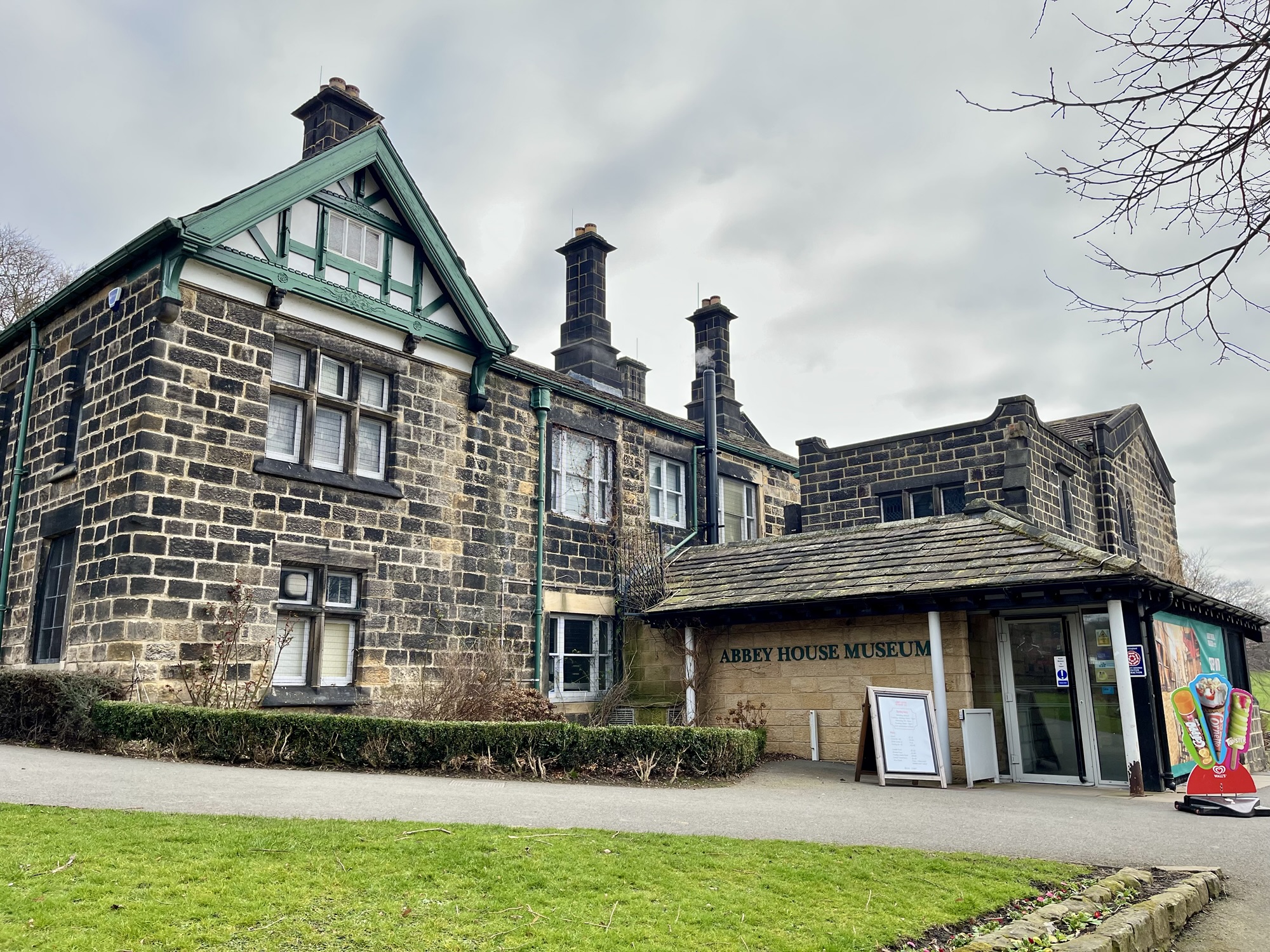
Abbey House Museum

A photo of the outside of the Abbey House Museum.

Last weekend, I took our nine-year-old to the Abbey House Museum in Kirkstall, near Leeds. We’ve been a couple of times before, and it’s a nice little museum to visit for half a day. It’s also recently been reprieved from closure, but in the long term it needs more people visiting it to be viable.

The Abbey House Museum is essentially in three parts. The first is a recreated Leeds street scene, with various shops and houses that have been saved and transplanted into the museum. There’s a pub, a pharmacist, a general store, and many others. It’s a bit like Kirkgate in the York Castle Museum, but on a smaller scale. It’s designed to show how ordinary, working class Loiners would have lived in the past.

Exhibitions

Next, you go upstairs to an exhibition space. Previous exhibitions that we’ve seen have included one about various common household objects from the past now considered dangerous, back in 2019. Older Lego bricks contained various heavy metals like cadmium, there were sore throat pastilles containing potassium chlorate which can spontaneously combust, and there were plenty of things with asbestos in them. The last time we went, which was in 2021, the exhibition was about the Leeds music scene and various bands and venues.

This year’s exhibition is called ‘Story Time‘, and is all about children’s stories. Expect to see lots of books and toys, both old and new.

In the next room are various entertainment machines, which can tell your fortune or show an animated diorama. They require one or two old pennies, which can be obtained from an exchange machine that takes modern day British currency. Each 1d coin costs 10p and so have a pound coin spare if you want to try every machine.

The final space is the childhood collection. There’s a collection of dollhouses and toys, spread across several rooms.

The street scene at the Abbey House Museum

History of the Abbey House Museum

The Abbey House Museum gets its name from Kirkstall Abbey, across the road, and it used to be the gatehouse. Parts of the building date back to the year 1152, and after Henry VIII dissolved the monasteries (yes, him again!) it was repurposed as a farmhouse. It became a museum in 1927, and so hopefully it’ll be able to celebrate its 100th anniversary now that it has been saved from closure.

Expect to be able to spend half a day at the museum – we combined our visit with a trip to Tropical World, but you could pop across the road to the abbey itself as well, if you want to make a day of it.

Accessibility

Access at the Abbey House Museum is pretty good. The street scene does have some uneven floors and narrow doorways, but there is a lift. A Changing Places toilet is also available, and there is a Max Card discount as well. There used to be a café in the museum but this is now only open as a picnic room for school visitors – instead, the Abbey has a café and there’s a pub nearby.

Free parking is available (at the time of writing, though note that Leeds City Council has recently introduced modest parking charges at many of its sites), and it’s on major bus routes from Leeds city centre. If you’re arriving by train, it’s roughly equidistant from both Headingley and Kirkstall Forge stations – both of which are about a mile’s walk.

Magna Science Adventure Centre

A photo of the outside of Magna Science Adventure Centre

What if I told you that Rotherham was home to one of Britain’s best science museums? Well, it is, in the form of the Magna Science Adventure Centre. I feel like it’s somewhere that I would’ve written about before, but can’t find a previous blog post about it. We’ve been a few times – I went with my parents when it first opened, and I’ve taken our little one several times, including last weekend.

History of Magna

Magna was one of a number of visitor attractions funded by the Millennium Commission, to mark the turn of the Millennium. It opened in 2001, with high expectations – further down the Don Valley, the Earth Centre in Conisbrough had opened in 1999 and was already struggling to meet its visitor targets. The Earth Centre ultimately closed in 2004 – a shame, as I’d enjoyed my visit there and felt it was perhaps ahead of its time.

Anyway, the good news is the Magna was more popular, and is still open today. Indeed, it had something of a refit in 2022, so if you’ve been before, there are some new things to see. Magna essentially fills two roles: a history of the area and, in particular, steelworking; and as a more general science museum.

Magna is housed in the former Templeborough Steelworks, or ‘Steelo’s’ as it was known colloquially. This steelworks used electric arc furnaces to recycle scrap steel – relatively new technology at the time, and allowed a significantly higher throughput than coal-powered furnaces. It did require a lot of electricity, however – a staff member commented that, if it was still running today, the steelworks annual electricity bill would be around £100million.

Templeborough Steelworks was massive – housed in a building around 1/3 mile (530 metres) long. Most of the building is still there now – it’s not quite as long as it once was, but it’s still massive. The site closed as a steelworks in 1993, with much of the massive industrial equipment remaining behind in situ, and it wasn’t long before it re-opened as Magna.

A photo of some sparks flying during The Big Melt at Magna.

Four pavilions

The main ‘sciencey’ bit of the museum is split into four ‘pavilions’ – air, fire, water and earth. The Air pavilion is in what looks like a blimp, suspended from the ceiling; fire is at the main level of the museum, water is on the ground floor and earth is underground. Almost everything is hand’s on, in the way that the best museums for kids are these days, so there’s lots of things to press, push and twist. In the Fire pavilion, there’s a demonstration of a fire tornado approximately every 10 minutes, and at weekends there’s also a forge demonstration where you can see how a piece of steel can be melted and shaped.

The water pavilion teaches the water cycle, and lets visitors compare different ways of moving water upwards. Down in the earth pavilion, you can control a digger and learn about quarrying and archaeology, and up in the air pavilion, you can see how wind energy and vacuums work.

The other major indoor attraction is The Big Melt, which runs on the hour four times a day. It’s a big light and sound show, which simulates how the electric arc furnace would have worked in its heyday.

Outside, there is a huge adventure playground, and in summer, there’s Aqua-Tek, which is a small waterpark. Obviously, this being February, it was shut.

Our nine-year-old pretty much demanded a return trip to Magna, hence our visit, and it’s one of their favourite places to visit. I agree.

Accessibility

Having been opened in 2001, mobility access to Magna is pretty good – there are lifts between the different floors and no stairs to manage. That being said, there are some uneven floors in the Earth pavilion in places.

If you experience sensory issues, it may be worth brining ear defenders. Some parts, like The Big Melt, are very loud. Also, on a practical note, it’s worth bringing a change of clothes and some swimming gear for kids, as they will get wet in the Water pavilion and/or Aqua-Tek.

Tickets are cheaper if booked online, and automatically become an annual pass for free repeat visits.

There is a car park on site, but be aware that Magna also has a huge events space, and so the car park may be full at weekends. When we went, there was a junior boxing competition, and this weekend it’s the Camra Great British Winter Beer Festival, so you may need to park some way from the entrance if you’re driving. It’s not far off the M1 junction for the Meadowhall Shopping Centre.

If you want to get there by public transport, then you can catch the X3 bus from Sheffield, Meadowhall or Rotherham, and it drops you outside the back entrance to Magna. In the near future, you’ll also be able to get to Magna by tram, as the Supertram Tram-Train service from Sheffield to Rotherham passes by the site.