An overview of other people called Neil Turner

An amalgamated screenshot of web sites about other people with the name Neil Turner

I suppose one problem with having a (relatively) common first name and surname, is that I’m not the only person called Neil Turner. If you do a Google search for ‘neil turner’, this blog is currently not the first result, although it has been in the past.

When I first joined Facebook, almost two decades ago, I was invited to two separate groups for people called ‘Neil Turner’. And I have even met someone in person called Neil Turner, albeit with a different middle name. And I get plenty of email to my Gmail address, which is derived from my name, meant for other people whose surname is Turner and who has a first name beginning with ‘N’.

So who are these other Neil Turners? Here’s a quick overview of the ones that I have found.

Neil Turner, the British author

The number one result on Google at present is a British author called Neil Turner, who writes financial thriller books after a career working at hedge funds in London and Frankfurt. Three of his books have been published so far.

Neil Turner, the Canadian author

I came across the Canadian author called Neil Turner because several people emailed me, expecting me to be him, to invite me to attend various book club meetings. Indeed, a few months ago I added a note to my contact page advising people that I am not the same person.

This Neil Turner is also an author of thrillers, focussing on the lawyer Tony Valenti. So far, there are 10 books in the Tony Valenti series.

Neil Turner, the retired Labour politician

If you go to the Neil Turner page on Wikipedia, nowadays you will see a disambiguation page which links to five other pages. However, in the past, it would have taken you straight to the former MP Neil Turner, who represented Wigan for the Labour party from 1999 to 2010. He was briefly a junior minister in Tony Blair’s latter days as Prime Minister, but announced in 2009 that he would not stand for the next election.

The Wigan constituency remains a Labour seat, with Lisa Nandy having retained it since the 2010 General Election.

Neil Turner, the photographer

Previously, Neil Turner the photographer was also a number one result on Google for ‘neil turner’. This person is based in Bournemouth and is a professional photographer who also has a blog. I suppose that makes him the opposite of me in a way, as I’m more of a blogger than a photographer, although I do neither professionally.

Neil Turner, the former rugby league player

Back to Wikipedia, and there is a former Rugby League player called Neil Turner. He played for Hull FC and Doncaster, as well as spending time as a police detective (if an unsourced statement on Wikipedia is true).

Neil Turner, the Australian politician

It seems that more than one person with my name has gone into politics as there was a politician called Neil Turner in Queensland, Australia. He served time as the Speaker of the Queensland Legislative Assembly in the mid-1990s, but he died in 2011.

Neil Turner, the Australian scientist

Another Australian namesake on Wikipedia is Dr Neil Clifford Turner, although he was born in the UK. He is an agricultural scientist who looks at how crops can adapt to dryer landscapes as a result of climate change.

Neil Turner, the retired British researcher

At the nearby University of Leeds, there’s Dr Neil A Turner, who researches cardiology and is based at the university’s medical school. He’s now retired but contributed to some published papers as recently as 2024.

Neil Turner, the British co-author

There’s a book called Toby and Sox, about an autistic boy and his therapy dog, which was authored by Vikky Turner and co-authored by her husband, Neil.

Neil Turner, the architect

There’s a Neil Turner who works for a Durham-based architecture practice called Howarth Litchfield. The company is currently involved in renovating Redcar station on the north-east coast.

Neil Turner, the footballer

There was a footballer called Neil Turner who died before I was born. He was born in Scotland, which figures as ‘Neil’ is originally a Scots-Gaelic name, and played for a number of teams in Scotland, England and later the USA.

Neil Turner, the British professor

Yet another member of academic staff with my namesake. Professor Neil Turner researches project management and supply chains at Cranfield University, and teaches on their research MSc programme in project management.

Neil Turner, the psychotherapist

If I lived in London and needed counselling, then I could make things really confusing by visiting a psychotherapist with my namesake.

There are many more people out there with the same name as me – these are just the people that came up on the first few pages of searching. What is notable is that almost all of these people are older than me; I think by the time I was born in the 1980s, the name ‘Neil’ was starting to go out of fashion. Indeed, it’s no longer in the top 100 baby names and so I can’t even track its popularity.

None of these people are especially famous. When I decided to write this, I was aware of three of them (the British politician, the British photographer and the Canadian writer) but mainly because these are people that I have been confused with in the past. I was unaware of the others until I researched this.

Also, should I ever decide to write a fiction book, I might need to write it under a pseudonym, or use my middle name. Having three published authors with the same name would get unnecessarily messy.

Mealie – self-hosted recipe manager

A screenshot of Mealie, the self-hosted recipe manager

I’ve been playing with Mealie recently. It’s a recipe manager, so you store all of the recipes that you have saved from various web sites and search them easily. You can also add your own recipes, including photos, and include a star rating.

Mealie isn’t the first recipe manager that I’ve used. Until now, I’ve used Mela as a recipe manager. Mela was developed by the same developer as Reeder, which I use for RSS feeds. Mela is really well-designed, and I’ve used it happily for three years, but it’s for Apple devices only. Whilst I use an iPhone and an iPad, I don’t use an Apple desktop anymore and Christine has an Android phone, so I’ve been looking for a cross-platform replacement.

Installing Mealie

Mealie is self-hosted. That means that it runs on a device that you own, rather than a web service, so you’ll need a spare device that’s always on to run it. A Raspberry Pi should be fine, and indeed that’s what I’m using. The other requirement is that the device runs Docker – again, I already had Docker up and running on my Raspberry Pi. If you use Home Assistant, you can install Mealie as an add-on.

There are two versions of Mealie, with different database storage systems. The easiest to set up is the one that runs on SQLite, which should be fine for a reasonable number of recipes and up to 20 users. If you’re planning to host a much bigger Mealie instance, with more users who all need to access Mealie simultaneously, then you can opt for a version which runs on PostgreSQL. This version should also offer better search, but will require more resources and may need a more powerful computer than a humble Raspberry Pi.

Adding recipes to Mealie

Once installed, and you’ve created an admin user, it’s time to add recipes. Mealie can import from a number of other recipe managers, although sadly not from Mela. So, I’ve been manually re-adding recipes as I go – I’ve made a start, but we have over 300 in Mela.

Recipes can be imported from a given URL, analysed from an image or typed in manually. You can also copy and paste the HTML of a web page if Mealie isn’t able to connect to a given URL; this is what I have done with some Mela recipes that I’ve exported as HTML.

Once the recipe has been imported, Mealie will then parse the ingredients. This allows it to build up a database of ingredients, so you can tell it what you have and it can suggest recipes from your library. It also allows you to adjust quantities in the recipe, if you want to make double or half, for example. By default, the parsing uses natural language processing (NLP) but if you have a paid OpenAI account, you can link this and have ChatGPT do the work too. I believe you can use other AI models if you wish, including self-hosted ones.

For the first few recipes, Mealie prompted me to decipher some ingredients that it didn’t understand. Although it has a ‘British English’ ingredient list, it’s not complete, and so I had to add some items. You can also added aliases for items, and over time, it got better at parsing recipes.

Phone apps

There are apps available for Mealie, but there isn’t an ‘official’ one as far as I can tell. On iOS, I’m using one called MealieSwift, which offers most features for free and the rest for a one-off £10 payment. Others are available. Once I’ve got more recipes migrated over, I’ll see about an Android app for Christine’s phone.

If you want to be able to access Mealie outside the home, then you may need to set up a reverse proxy – I use Nginx Proxy Manager for this. The Home Assistant Addon supports Ingress, so you can also access it remotely through the Home Assistant web interface if installed that way. Speaking of Home Assistant, there’s a built-in Mealie integration that you can setup once you have Mealie installed. Mealie offers a powerful API, and so you could potentially build some interesting automations with it.

Meal planning

As well as storing your recipes, you can use Mealie to plan meals, by allocating recipes to meals in a calendar. You can take that further and also use Mealie to develop a shopping list, which will include the ingredients for the recipes you have added to your meal plan. Mela does this as well, and integrates with the native calendar and reminders features on iOS and OS X. The MealieSwift app that I use doesn’t do this, but it should be possible using Mealie’s API.

GeekMagic SmallTV Pro & Home Assistant

A photo of my GeekMagic SmallTV Pro showing a Home Assistant dashboard

I recently bought a GeekMagic SmallTV Pro (sponsored link), which is a small, always-on desktop screen that runs on USB power. Out of the box, it can display the weather, a small range of photos, share prices and cryptocurrency prices. However, I’ve connected it up to Home Assistant to display a dashboard.

There are two varieties of the GeekMagic SmallTV – the ‘Ultra’ and the ‘Pro’. The ‘Ultra’ is actually the more basic model, and isn’t available to buy on Amazon. Both types are available on AliExpress, however. Inside, the ‘Ultra’ model has an older ESP8266 chip, whereas the ‘Pro’ has the newer and more powerful ESP32 chip. Both offer a roughly one inch square screen and connect using USB-C.

Setting up the GeekMagic SmallTV

Like many ESP-based devices, when you first plug the GeekMagic SmallTV in, it’ll create its own Wi-Fi access point. Connect to this on your smartphone, and it’ll pop up a captive portal where you can select your home Wi-Fi network and provide the password.

It’ll then reboot and connect to your home network, and will flash its new IP address whilst booting. You can then go to http://[IP Address]/ in your web browser to configure settings. Note that the cheaper ‘Ultra’ model doesn’t support stocks or cryptocurrency tracking.

Screenshot of the GeekMagic SmallTV dashboard editor in Home Assistant

Integration with Home Assistant: Method 1

There are two ways that you can integrate your GeekMagic SmallTV with Home Assistant. Method 1 is the method that I have used, as it’s less invasive and leaves the stock firmware intact.

Inside Home Assistant, open HACS, and add the above-linked GitHub page as a repository. You can then install the GeekMagic integration – once done, reboot, and then add your device on the Integrations panel.

How this integration works is by generating an image of several dashboard entities, which it then pushes to your device. You should notice a new ‘GeekMagic’ section on the main sidebar that allows you to open the dashboard editor – click this, and you’ll be able to create a new dashboard.

There are multiple layouts available, allowing you to display between one and nine entities. Theoretically, any entity in Home Assistant can be added. Personally, I’ve added the date and time, my solar battery status, the weather, my car’s charge status, how much energy is being generated by my solar panels, and my dishwasher’s progress through a cycle. Most of these are ‘gauge’ displays in the ‘ring’ style, so as well as showing the percentage, the ring gives a clearer visual indication of progress. This is good on such a small screen.

Once set up, the integration pushes a new image to the GeekMagic SmallTV device on a regular basis. I found that I had to remove all of the other images, and set it to change every 10 seconds, to keep the dashboard showing and updated.

Integration with Home Assistant: Method 2

If you clocked that these devices have ESP chips earlier, then it won’t surprise you that people have installed ESPHome on them. This involves replacing the stock firmware with ESPHome, which is easy to do – the web interface on the stock firmware has a firmware upload tool that should accept an ESPhome binary. I say should because I haven’t tried it personally.

If not, then the good news is that this device is easily dismantled – there are a couple of standard screws on the bottom. Inside, the printed circuit board includes GPIO pin holes for its UART interface. That may also help if you accidentally brick the device and need to replace the firmware manually.

I haven’t gone down this route as yet, as it takes more work. You would have to specify what to display on the screen in the ESPHome YAML configuration, and you’ll lose all the other functionality provided by the stock firmware. Also, be aware of various copycat devices with slightly different chips; they’ll almost certainly still run ESPHome but you may need to amend the configuration slightly.

I quite like my GeekMagic SmallTV Pro – it’s handy to be able to track key entities in Home Assistant without having to open my phone or look at the full dashboard. And it’s sufficiently low power that it can run all the time.

Flung into February

Back in February 2024, my wife Christine described the preceding January as ‘the Januariest January that ever Januaried’. And whilst January 2025 was also something of a slog, for us at least, this January hasn’t been so bad. I think it’s helped that I had a few days off work at the start, and so wasn’t back to work until the 6th. But also, we had some days out, including Hardwick Hall and the Thackray Museum.

And so to this February. Usually when I post something on the first of the month, it’s to tell you what we’re up to this month. Which, based on a glance at my calendar, is not a lot. Valentines Day is next Saturday, which means no hope of a nice but affordable meal out anywhere. Not that we’re big on Valentines Day – normally we just exchange cards. Our 2014 surprise jaunt to London was very much an exception. We may do a nice meal at home, although how romantic we can be with a ten-year-old in the house is questionable.

Speaking of the ten-year-old, they are overdue for a birthday party so we’ll be organising that this for this month. Even though their actual birthday was a few weeks ago. We haven’t done a birthday party for them since they turned seven, but turning 10 is a bigger deal.

I have a few blog posts already lined up, so there should be plenty to read about on the blog this month. We may even manage the occasional day trip, depending on the weather. We’ll see.

Unblogged January

A photo of January's 'Wolf Moon', taken by me in Derbyshire

I didn’t do one of these in December, although I think anything that I would have written about went into the 2025 review. Instead, here’s what I got up to in January that didn’t merit a full blog post.

The Wolf Moon

That photo of the moon at the top isn’t a stock photo – I took it myself! A full moon in January is known as a ‘wolf moon‘, and the moon happened to be closer to the earth than average so it appeared much larger in the sky.

The photo was taken on my Canon EOS 90D DSLR camera, but I admit there was some luck involved. I used the pop-out screen to set the correct exposure automatically, rather than experiment with various settings. I didn’t even need to use a tripod, and that photo was the first and only one I took. It’s been minimally cropped and edited.

As for where I took the photo? Well, after visiting Hardwick Hall, we took a detour and went to the Chatsworth Farm Shop. That photo was taken in the car park – being out in the countryside meant there was less light pollution. It also meant that, as well as getting a fabulous moon photo, we also picked up some of Chatsworth’s excellent maple-cured bacon. Seriously, it is probably the best bacon we’ve ever tasted.

A return visit to NESM

Last April, we went to the National Emergency Services Museum in Sheffield. As the tickets automatically become an annual pass, earlier this month I went back there with our ten-year-old. On our previous visit, there had been a Steampunk event on (it looks like it’s returning this April) and so we never got to visit the top floor, or the police cells.

This visit was an opportunity to rectify that, and so we got to learn about HM Coastguard, the Royal National Lifeboat Institution (RNLI) and the Yorkshire Air Ambulance. There’s also a recreation of a multi-agency response, where different emergency services have to work together – in this instance, a car crash which requires the police, ambulance and fire & rescue services. The museum is fundraising for a much-needed extension and I hope it’s successful – it’s a fantastic little museum and clearly needs more space.

Also, we bought a Plague Ducktor in the gift shop.

A screenshot of our results from the RSPB Big Garden Birdwatch

Garden Birdwatch results

We took part in the RSPB Big Garden Birdwatch on Sunday morning, which happened to be really wet and dreary. Despite this, we managed to see around 14 birds – mostly sparrows, but also a couple of blackbirds and bluetits. We fleetingly saw a wagtail too, which wasn’t on the core list.

(not) Changing Mobile Network

My mobile phone contract came to an end this month, and so I used a Martin Lewis trick to request a Port Authority Code (PAC) to port my number to another provider. This resulted in my current provider giving me a better offer than their standard upgrade deals, so now I have almost three times more data each month for less money than I was paying before. And, I don’t have to switch to a different network. All the haggling was done via Live Chat too, so I didn’t even need to call someone.

A photo of a Star Wars themed Lego set at the Calder Valley Brick Show

The Calder Valley Brick Show

We popped into this year’s Calder Valley Brick Show in Mytholmroyd last weekend. It’s an annual show for amateur Lego builders to show off their creations. Some are based on standard sets – often the older sets from the 1980s and 1990s – whereas others are custom builds. There were quite a few Star Wars dioramas there, but there was a good mix. Next month, there’s Bricktastic at Manchester Central (what used to be G-Mex) which is a much bigger event, although it looks like a number of the sets we saw will be there too.

Thackray Museum of Medicine

A photo of the outside of the Thackray Museum of Medicine

A couple of weeks ago, we went to the Thackray Museum of Medicine in Leeds. It’s next to St James Hospital, and tells the history of medical care in the UK from the 18th century until the present day.

History of the Thackray Museum

The Thackray Museum first opened in 1997, so it’s just shy of its 30th anniversary. It gets its name from the pharmacist Charles Thackray, who opened a chemist shop in Leeds in 1902; over time, the company branched out into manufacturing medical devices such as replacement hips. The company’s archive, in the care of Charles Thackray’s grandson Paul, became the basis of the museum’s collection.

The building housing the museum pre-dates the hospital next door, and opened in 1861 as a workhouse. However, a medical wing was established, and it was requisitioned as a hospital during the first world war. It then remained in use as part of St James Hospital until 1990, when it was deemed no longer fit for modern medical use. However, by this time it had become Grade II listed, and so rather than demolish it, the building was converted for use as a museum.

This wasn’t our first trip to the Thackray Museum. I visited with my parents when I was still living in York, within a few years of it opening, and Christine and I visited some time in the early 2010s when we were living together. We also visited in 2022, as a family of three; this was our first visit following a major refurbishment that started just before the Covid-19 pandemic. So our visit this month was our fourth visit.

A view of Disease Street inside the Thackray Museum of Medicine

Inside the Thackray Museum

Whilst you can pick and choose the order in which you view each of the museum galleries, the recommended route is to start off with Disease Street. This is a recreation of a street in Leeds in the early nineteenth century, towards the start of the Industrial Revolution when large numbers of people moved into the cities to work. You can choose to follow the fate of a person who would have lived during that time, and would find out why diseases thrived in the filthy conditions that working people had to live in. The person we chose ended up dying of consumption (tuberculosis) aged just 27.

Opposite Disease Street is a recreation of an old operating theatre, from a time before anaesthesia. You can watch a recreation of an operation on a young girl having an amputation, following a factory accident. Or not; the room rightly comes with significant trigger warnings and certainly our ten-year-old wasn’t keen to watch. But, you can see why we still refer to such rooms in hospitals as ‘theatres’ as they were designed to accommodate lots of spectators.

Also downstairs is Disease Detectives, about microorganisms and their impact on our health. There’s quite a bit about our microbiome and how this is an emerging area of science that is updating our understanding of the role of bacteria.

A photo of the apothecary collection inside the Thackray Museum of Medicine

Upstairs

Christine’s favourite bit of the Thackray Museum is the apothecary shop, which has (probably) the world’s largest collection of ceramic apothecary jars. It explains the role of an apothecary, and how this evolved over time into the modern day Pharmacist. Outside, there used to be a jar of live leeches, but it wasn’t there when we visited this time.

The largest room upstairs is home to Cutting Edge, which shows some of the museum’s collection of medical equipment, and how this has changed over time. Something that the museum has always had is an ’empathy belly’, which is a wearable harness that simulates what it’s like to be pregnant. You can try it on yourself; it’s not the original one from 1997 but a newer one of a type used in current medical training.

Opposite is another large gallery called Normal and Me. This focusses on the stories of people who live with various disabilities or health problems, as well as ‘normal’ life stages such as puberty. It includes plenty of artwork by local artist Bobbie Rae, who we’ve met at Thought Bubble these past two times. To the side of this is an exhibition about medical car in war zones, and a section about sexual health.

Inclusivity

As you would expect from a museum that underwent a major renovation this decade, some effort has been put in to ensuring that the exhibits are inclusive. A description of a pregnancy test refers to ‘people with a uterus’, to include trans men and non-binary people who may want to see if they are pregnant, for example. And there are contributions from LGBTQ+ people, including those unfortunate enough to have experience conversion therapy.

Leeds is a diverse city, and its healthcare workforce especially so, and again, this is represented in the museum. It’s also very up-to-date, with several exhibits related to the Covid-19 pandemic, and recent medical advances.

Accessibility

Accessibility at the Thackray Museum is pretty good; despite it being an older building, there are wide doorways, a changing places toilet and sensory spaces. However, when we visited, the lift was broken.

The Thackray Museum is run by a charity, and there is some flexibility with the admissions prices depending on your circumstances and how generous you feel. You can therefore pay £9 per person, or more – there’s a £16 per person ticket which subsidises the £9 tickets for others. Under 7s get in free, as do holders of the National Art Pass and Max Cards.

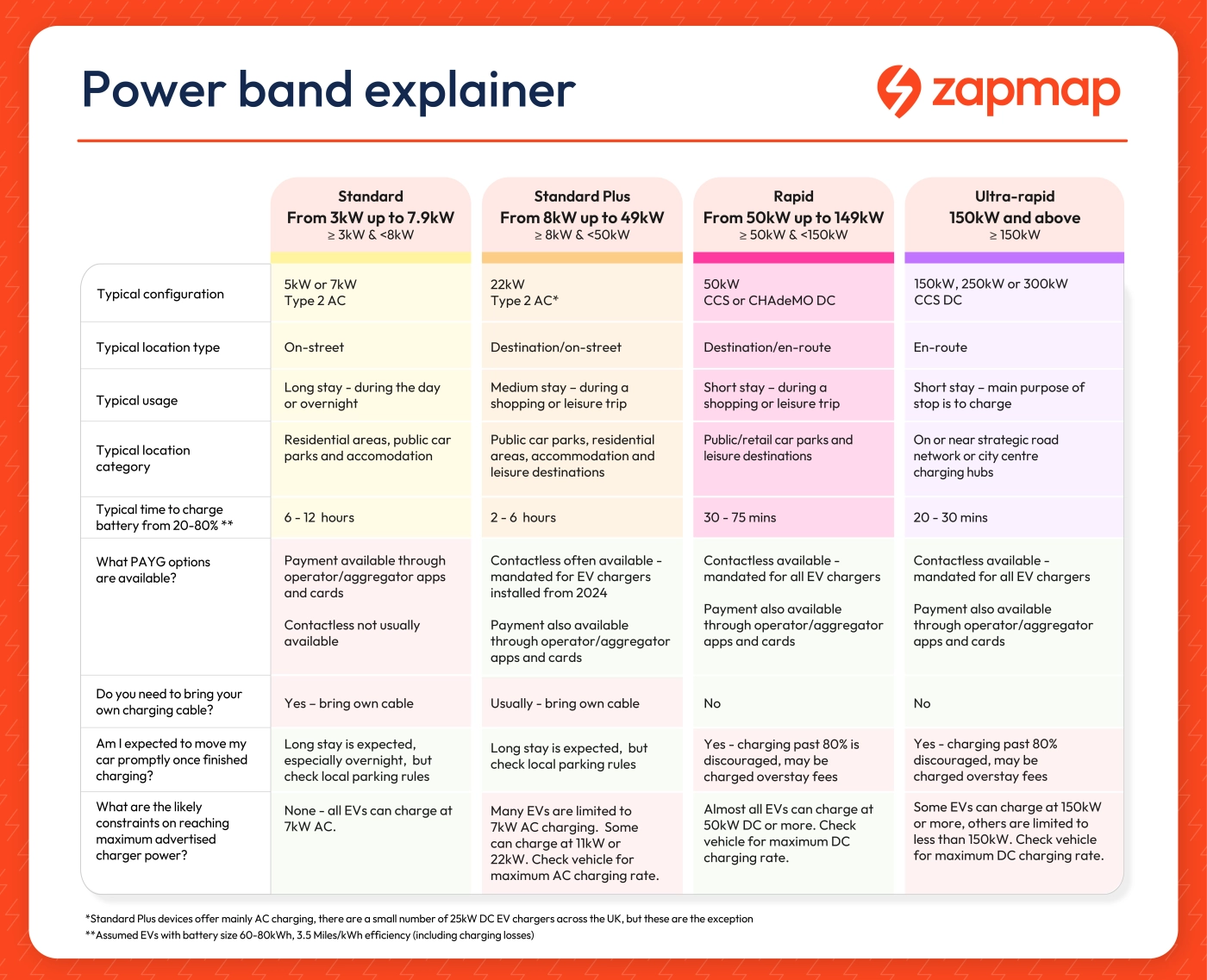
There is some on-site parking, which is right outside the front entrance. It’s pay-and-display at £2 per hour, or you can pay on the PayByPhone app. A typical visit will be 2-4 hours; there’s a café, shop and a kid’s soft play area as well. The car park doesn’t offer electric vehicle charging, but there’s a Morrisons offering rapid charging a short drive away (CCS2 plugs only, no CHAdeMO).

As it’s next to St James Hospital, the museum is served by regular direct buses from Leeds Bus Station. If you arrive in Leeds by train, then the number 16 bus leaves from City Square, near the station, and drops you pretty much outside the museum. Otherwise, it’s a 45 minute walk from Leeds station.

Playlist of the month: Ska covers

Screenshot of the ska covers playlist on Spotify

This month’s playlist comes from me discovering the band Skameleon. They’re a German band who specialise in covering pop songs in the third-wave ska style.

I’ve long had a soft spot for ska music – a close friend of mine started to get into it when we were at college and so I passively listened to lots of his music. It was also popular when I get to university, as part of a broader alternative music scene along with metal and pop-punk. So, this month’s playlist starts with Skameleon, and includes various other ska cover versions by other bands. As usual, you can listen along on Spotify, and, if you want a longer playlist, here’s another one that I found.

  • “Rhythm Is A Dancer” by Skameleon. This is a cover of Snap’s 1992 dance hit. Skameleon have done a couple of albums of covers now and this is one of the better ones, but they’re all pretty good.
  • “Get Lucky” by Russkaja. Russkaja were a Russian-themed ska band from Austria, with some songs sung in Russian; they disbanded in 2023 following the war in Ukraine. This is a cover of the Daft Punk song with Pharrell Williams.
  • “Take On Me” by Reel Big Fish. You can’t have a third-wave ska playlist without at least one Reel Big Fish song on it, so here’s their cover of a-ha’s greatest hit.
  • “Hot N Cold” by Los Colorados. Speaking of Ukraine, this is a Ukrainian band that do covers – indeed, when they recorded this version of Katy Perry’s song, the lead singer didn’t actually speak English.
  • “Come On Eileen” by Save Ferris. This is a classic 2000s student union rock night staple, and a cover of the song by Dexy’s Midnight Runners.
  • “Chop Suey!” by King Punch. Speaking of 2000s student union rock night staples, you would often come across this System Of A Down song. Here’s a ska version of it.
  • “The Final Countdown” by Furillo. Apparently the band Europe have released 11 studio albums, so to call them a one-hit wonder would be inaccurate, but I’ll admit this is the only song of theirs I can name.
  • “I Will Survive” by Me First And The Gimme Gimmes. Another band that typify third-wave ska, this is their cover of the Gloria Gaynor classic.
  • “Hotel California” by Skadaddyz. The Eagles’ original is quite a laid back song that converts quite easily to ska, courtesy of the Skadaddyz.
  • “YMCA” by The Skunks. Again, the use of brass instruments in the Village People original makes this a relatively straightforward conversion to ska.

The RSPB Big Garden Birdwatch

A photo of the guide and tally chart for the RSPB Big Garden Birdwatch

If you have a garden, and a spare hour this weekend, you could take part in the RSPB’s annual Big Garden Birdwatch. It’s a citizen science project that allows the RSPB insights into which birds are most common in British gardens, and identify trends over time.

The RSPB Big Garden Birdwatch normally takes place on the last weekend of every January. Anyone with a garden can take part – you don’t need to be an RSPB member. In fact, even if you don’t have a garden, you could go to a public park, or monitor a shared space from a balcony. The aim is that you record the birds that land in the space during a one hour period.

If you’re really keen, you can count the birds in more than one place. For example, if you have both a front and a back garden, you could spend an hour counting birds in one, and then a second hour counting the birds in another. The key aim of the Big Garden Birdwatch is that as many open spaces as possible are monitored, for an hour each, over the course of three days.

How to take part in the Big Garden Birdwatch

You don’t need to be a knowledgable birdwatcher to take part. We signed up some time ago, and so the RSPB sent us a pack in the post (pictured above). It’s a bit late for posting things now, so there’s a downloadable PDF which includes the most common species of bird that you’re likely to see. You can tick them off – but remember to count how many of each species you see too.

After the hour is over, you can submit your results online. The form will be open until the 22nd February, so there’s no rush. You can also post your results to the RSPB, but the form is quicker and will accept a wider list of birds. So if you’ve been really lucky and spotted (for example) a jay or a sparrowhawk, then you’re probably better submitting online. We’ve previously had both in our garden, but not during a Big Garden Birdwatch session.

Solar panels – a 3 year retrospective

A screenshot of the spreadsheet that I am using to track solar panel savings

Roughly three years ago to the day, we invested in a set of solar panels, along with an inverter and battery. Although I did a two year review last year, I’ve decided to do another one as we’ve reached the point where we’ve recouped 25% of our initial investment.

Back in 2023, the system we had installed cost around £11,000. We paid for most of it out of savings, topped up with a contribution from my parents and the rest was borrowed. We finished paying off the borrowed money at the end of 2024. So, on the basis that it has taken us three years to get to 25%, it means the full return on investment will probably take another 9 years. By then, we’ll still have a couple of years left on the mortgage, and our ten-year-old may or may not have left home by then.

Our system is from SolaX, and although they provide an app, I also transpose the data each month into a spreadsheet. What is notable is that 2023 was our best year – for example, in May 2023, our total savings were £136.78, made up of £85.90 of saved electricity and £50.88 of exported electricity. Over the course of the entire year, we saved £855.45.

Savings in 2024 were lower – £750.79. And last year was only a few pence higher at £750.96. Indeed, the weather last month was pretty terrible, as we only saved £11.43 and didn’t export anything. Suffice to say, we’ve already saved more this month with several days left to go. On average, our system saves us £65.48 per month on our electricity bill, and in some of the summer months, we actually get a net negative electricity bill as we export more than we use.

One thing we haven’t yet done is have our solar panels cleaned. It may be that, after being cleaned, they may allow more light in. However, having spoken to others online, they’ve found that it makes very little difference.

I think it’s important to be open about the savings we’re making. Whilst prices have come down – a similar system may cost around £9000 now – getting solar is a big investment, especially when paired with a battery. As such, I hope this information is useful if you’re considering getting solar and have a suitable property.

2026 vs 2016

Side by side photos of me in 2016 and 2026 (almost)

There seems to be some nostalgia for 2016 at the moment. It mostly seems to be about the music of 2016, but apparently it’s also because people have started putting filters on their TikTok videos like we used to with Instagram photos in 2016.

I did a review of 2016 at the time, so you can read that, I suppose. 10 years ago, our 10-year-old was, well, a newborn baby, and so whilst they were born in 2015, most of the first year of their life fell in 2016. So it was quite a memorable year for us in that sense.

2015 had been a big year – we’d bought a house, I passed my driving test and bought a car, and we became a family of three. So 2016 was more of a consolidation year, with Christine on maternity leave for the first half (and me having the whole of January off on paternity and annual leave). I changed jobs twice – securing a secondment doing timetabling in early February, and then moving to a new permanent role in August. I’m (essentially) still in that role now.

Our house that we bought in 2015 was (and to some extent still is) a work in progress, and so in 2016 we had a downstairs bathroom installed, along with a new boiler and a Nest thermostat – our first piece of smart home technology. And despite having a small child, we did manage some trips – I went to London twice, we had an overnight trip to Liverpool, we went to see two friends get married up near Durham and had a day out in Oxford.

The photo at the top is a then-and-now comparison; not having a newborn means I’m less tired, but I’m a little wider nowadays and need to wear glasses. Also, there’s quite the difference between the front facing camera on the iPhone 5S (2016) and the iPhone 13 Mini (2026).

So on the whole, at least for us, it was a good year. Although the Brexit referendum, Trump’s first election and all the celebrities who died that year were less good outcomes.