
Sonoff Wi-Fi RF Bridge review

A photo of a Sonoff Wifi RF bridge

I’ve been thinking about my doorbell, and knowing when someone rings it. Obviously it chimes when I’m at home, but I was hoping that with this Sonoff Wi-Fi RF Bridge, I can get notifications on my phone and a log of when people call when I’m out.

We don’t have a smart doorbell, like Ring for example. Ours is a Koopower Wireless Doorbell that I was sent to review six years ago. The Koopower doorbell doesn’t need a battery – the act of pressing the button generates sufficient power to send a RF signal to the receivers.

What I was hoping with this Sonoff RF bridge is that it could also listen out for doorbell pushes, and send me a notification. I could also integrate it into Home Assistant, which could handle logging. As you can probably tell from how I have written this blog post so far, I haven’t been able to achieve this.

Setting up

The Sonoff RF bridge is pretty small – about 2 inches (5 cm) square. In the box is the bridge, a quick start guide and, erm, well, that’s it. You need to provide your own micro-USB cable and a power source capable of 5 volts and 1 amp – so most phone chargers, or even many batteries. The bridge just has two LEDs – a blue one indicating the Wi-Fi status, and a red one the RF status. The only other thing of note on the bridge is a hole for poking a paper-clip in to reset it – there’s no other buttons.

Once you have hooked it up to a suitable power source, you can use the eWeLink app to set it up. This allows you to connect the bridge to your home Wi-Fi network, and pair RF devices.

Pairing devices

In the eWeLink app, you put the RF bridge into pairing mode, and then have 60 seconds to perform an action on your RF device. When it detects a signal, it’ll save the codes transmitted using RF, and will give you a button in the app. By pressing that button in the app, the RF bridge will mimic the action on your remote. So, you can ‘teach’ your bridge to turn an air conditioning unit on and off, rather than using its remote.

The fun comes when you link your RF bridge to a smart home ecosystem, like Google Assistant, Amazon Alexa or Home Assistant. Your bridge will appear as a device, and so you can use your voice to control appliances that are not ‘smart’ and are not on your home network.

That’s the theory anyway

As I write this, I haven’t been able to get my RF bridge to detect my doorbell, even though they both use the same 433.9 MHz frequency band. Even with the doorbell receivers switched off, and me holding the RF bridge next to the doorbell (did I mention you could run it from a battery?), it doesn’t detect a signal.

Now, to be fair, there’s no mention of compatibility with wireless doorbells in Sonoff’s marketing. Indeed, pairing RF devices can be hit-and-miss; you won’t, for example, be able to use an RF bridge to unlock your car, as the codes are changed each time you lock and unlock your car. Trust me, this is a good thing; otherwise, devices like these could be used to break into people’s cars.

If you have RF remotes, then this should work; it should also work with RF window opening detectors, alarms and curtain controls. Note, however, most remote controls use infrared, rather than RF – if your remote requires you to point it directly at the device, then it’s probably infrared, not RF.

RF bridge Home Assistant integration

I mentioned that you can get the Sonoff RF Bridge to appear in Home Assistant. There isn’t an official integration, but there are several ways you can achieve this:

  1. Flash it with custom firmware from ESPHome or Tasmota
  2. A custom integration available in HACS
  3. An addon which uses Home Assistant’s API

My initial searches only led me to option 1, and I didn’t fancy taking apart my brand new device to install custom firmware on it. Thankfully, there’s a Sonoff integration in HACS which allows you to log into your eWeLink account, and seems to work well. The addon is something I only found whilst writing this blog post, and it looks like this is actually the official way of integrating eWeLink with Home Assistant as it’s in the same GitHub account. You can use a Docker image instead if you’re running Home Assistant Container.

The alternatives

It’s possible that I have a dud unit, and so I have ordered a different model from AliExpress which uses Tuya. At the time of writing, this cost less than £1, which is clearly some kind of introductory offer as it’s normally £17. This Tuya model also supports infrared, and the 315 MHz RF band. I’ll let you know how I get on with it, when it arrives in a few days.

There’s also the option of building your own. The main components inside the bridge are a standard ESP8285 chip for Wifi and Bluetooth, and a EFM8BB1 chip for RF. You can therefore buy these yourself, solder them onto a board, and use the ESPHome or Tasmota firmware to achieve the same thing. I’m not yet that far down the home automation rabbit hole to build my own devices, but you could consider it.


Cheap international roaming – Airalo eSIM

A screenshot of an iPhone 13 Mini running iOS 16 which has both a regular SIM and an eSIM installed

It used to be that, before Brexit, all of us Brits had free roaming on our mobile phones across other EU member states. Now, O2 is the only Big 4 mobile provider not to charge for roaming in the EU. I’m with Three, who re-introduced roaming charges despite being one of the first to scrap them even before they were required to.

So, in the second of my two blog posts about things we’ve done to make our holidays a little easier, I’m going to talk about eSIMs, and how you can use them to get cheaper data when travelling. The first post was on using a tag to pay for motorway tolls in Europe from Monday.

An eSIM is an ’embedded SIM’. So, unlike a SIM card that you put into your phone, an eSIM is built in. However, newer phones make this eSIM re-programmable, and so you can download a profile to change your eSIM to a different network. Normally, this is in addition to whichever physical SIM card is in your phone.

What this means is that you can have your regular SIM for making calls and sending/receiving SMS messages, and then a different eSIM for data. This can be a local eSIM, so you don’t have to pay roaming charges. And, because your regular SIM is still there, you’re still reachable on your regular phone number.

A screenshot of the Airalo web site which lets you buy an eSIM

Buying an eSIM from Airalo

Whilst in France, I bought my eSIM from Airalo. You install their app, purchase your eSIM, and then install it so that your phone can use it. It’s straightforward, and the eSIMs are not expensive. I paid $10 for a 3 GB eSIM that was valid for 30 days, which was sufficient. By contrast, I would have spent £2 per day to roam with Three, which would have added up to £20. $10 is roughly £8, so it saved a little money. Airalo also offers ‘Airmoney’ which is essentially cashback on each purchase, that can be accumulated towards buying more credit.

When you have both a regular SIM and an eSIM active, your phone should show the signal for both. In my case, I was connected to Bouygues for voice and SMS, and Orange for data.

If you use an iPhone, then you’ll need an iPhone XR, XS or XS Max or later. These were the models announced in September 2018, so unless you have a very old iPhone, you should be able to use an eSIM. Obviously support for Android phones will vary by manufacturer; my wife has a Samsung Galaxy phone of a similar age and this didn’t support an eSIM.

Whilst there are other eSIM retailers besides Airalo, this is the one I have experience with. If you want to try them yourself, then if you use the code ‘NEIL6715’ when signing up, you’ll get $3 credit.

The 7 election candidates in Halifax

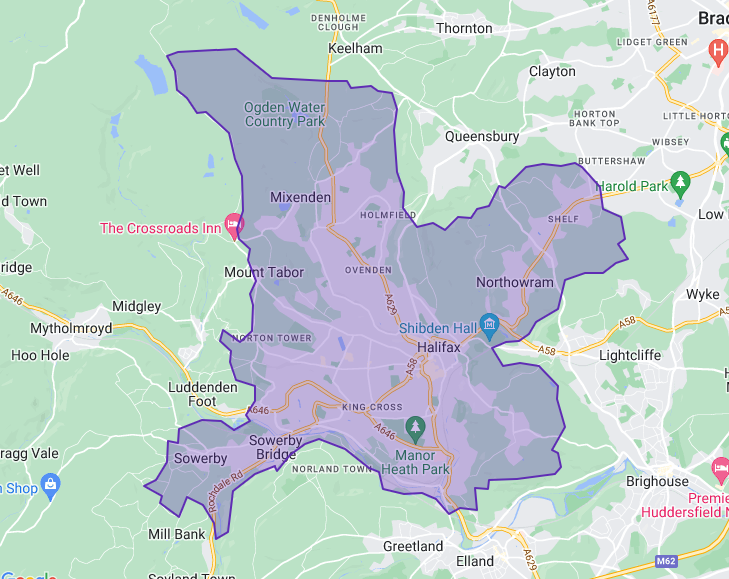
A screenshot of the map of the Halifax parliamentary constituency

So, there’s a General Election coming up on the 4th July. Although I live in Sowerby Bridge, our local constituency is Halifax, as we’re lumped with the larger town just up the road.

Since the last general election at the end of 2019, there’s a couple of changes.

New constituency boundaries

The first change is the constituency boundary. Whilst there will still be 650 constituencies across the United Kingdom, the boundaries have changed to ensure that there’s a more even balance of population in each. In our case, the Halifax constituency has grown slightly, and now includes part of the Ryburn ward which used to be in the neighbouring Calder Valley constituency. This adds the villages of Sowerby and Triangle.

A new MP

Our previous Labour MP, Holly Lynch, decided not to run again. She is currently pregnant with her second child, and trying to run a re-election campaign whilst expecting doesn’t sound like my idea of fun. She’s been our MP since the 2015 general election, and was re-elected in 2017 and 2019.

So, using the list from WhoCanIVoteFor, here’s who I’ll be able to consider voting for next month:

Labour: Kate Dearden

Kate is the Labour candidate, and most likely to win; Halifax has elected a Labour MP at every election since 1987. Indeed, since 1964, the Tories have only held the seat for the four years prior to 1987. As I’m a member of the Labour party, I’ll be voting for Kate.

Though not born in Halifax, she grew up not too far away in Bingley, and has worked in trade union roles prior to becoming a political candidate.

Reform UK: James Griffith-Jones

Reform is Nigel Farage’s latest political vehicle, and is fielding candidates in just about every constituency in England, Wales and Scotland this time. Previously known as the Brexit Party, James previously stood for UKIP in a local council election in 2016, but there’s a lack of information about him on Reform’s web site. Reform may be popular with some of the more rural areas of the Halifax constituency but I can’t see him winning here. The Brexit Party previously came third in 2019, beating the Liberal Democrats, but only winning 6% of the vote.

This post was edited on Wednesday 26th June in response to a comment from James Griffith-Jones who states that he is not a ‘far-right’ candidate.

Green Party: Martin Hey

Martin is already active in local politics, having been elected a local councillor in the Shelf and Northowram ward a couple of years ago. Judging by his profile, he’s a bit of a NIMBY and concerned with the amount of housebuilding proposed for the area. In the last general election in 2019, the Greens came last with just 2% of the vote.

Independent: Perveen Hussain

In addition to the six parties fielding candidates, there’s one candidate standing as an independent, who is Perveen Hussain. According to her candidate statement, she’s a local businessperson and a campaigner, especially around Palestine. The Park ward in Halifax has a large Muslim community and she may see some support here.

Liberal Democrats: Samuel Jackson

We don’t know what Samuel Jackson’s middle name is, so I’ll leave the Nick Fury comparisons out for now. He’s a local lad, born in the constituency, who works in one of the local textile factories. As mentioned, the LibDems polled fourth in 2019 with a little under 5% of the vote.

Workers Party of Britain: Shakir Saghir

Now this is an interesting one. The Workers Party GB is George Galloway’s latest vehicle, and Shakir recently outed Labour in the Park ward in the recent local council elections. I happened to drive through the ward on election day last month, and his posters were everywhere, alongside photos of Galloway and lots of messaging around Palestine. Policy on Palestine has been one of Labour’s weak points this year.

WhoCanIVoteFor reveals that Shakir was previously a Tory, having stood several times for the Conservatives in local council elections. His switch to the Workers Party seems to have helped him get elected in Park ward, but I would be surprised if he can repeat that success across the wider Halifax constituency. Also, as someone who used to work in Bradford West during Galloway’s last stint as an MP between 2012 and 2015, he comes across as an absolute grifter.

Conservatives: Hazel Sharp

Hazel Sharp has her own, rather basic web site. She’s originally from Scotland, but now works as a physiotherapist for the NHS. Which, considering the current Tory government’s record when it comes to the NHS, is surprising. Having looked at her Facebook page, her campaign seems to be focussed on a handful of more rural areas, with nothing from the suburbs of Halifax itself.

The Tories have come second in every election since losing the seat in 1987, and only lost by 400 votes (1%) in 2015. However, with their frankly disastrous campaign and falling poll ratings, I would be very surprised if Hazel is elected as Halifax’s next MP.

FWIW, I realise that Diamond Geezer has done the same for his constituency in London, but I had planned to write this for some time. Anyway, if you live in Halifax, vote for Kate Dearden on the 4th July.

European motorway toll tag

An AI-generated image of a car passing through a motorway toll plaza

Today’s the first of a couple of blog posts about things that I’ve done to make our holidays a little easier. This blog post is about Emovis Tag, who sell a small electronic tag to pay for motorway toll plazas in France, Spain and Portugal.

Normally, we go to France on our summer holiday, and take our car with us. Unlike British motorways (with one exception), French motorways are usually privately owned and financed, and so most charge a toll for use. Since 2018, we’ve used a tag from Emovis Tag, which lets you drive through motorway toll plazas without having to stop and pay. Instead, your motorway toll charges are accumulated, and then taken from your UK bank account by direct debit each month.

A photo of a Liber-T tag in the windscreen of my car

For France, you get a standard ‘Liber-T’ tag, and there’s a separate tag that works for motorways in Spain and Portugal. That means that if you’re driving through France and either Spain, Portugal or both, you’ll need two tags. Emovis Tag will send you your tag(s) by post, and you fit them to the dotted area of your windscreen.

Then, once you’re in France, and come across a motorway toll plaza, you ensure that you’re in a lane with the ‘Liber-T’ icon (a lower-case ‘t’) and drive through at a walking pace. The tag should beep loudly at you, and the barrier in front should open to let you through. There’s usually no need to come to a complete stop.

Some motorway toll plazas have longer lanes where you can approach at 30 km/h (about 20mph) and so you don’t have to slow down as much.

Advantages

The key advantage of having one of these tags is that you don’t need to come to a complete stop, either to collect a ticket or pay a motorway toll charge. Whilst this may only save a few seconds, it adds up if you have a long journey.

It also overcomes an issue with British right-hand drive cars; most machines and booths at the motorway toll plazas are designed for left-hand drive vehicles. If you don’t have a front-seat passenger in the car, or they’re like my wife and have a tendency to sleep in cars, then you don’t need to reach over to pay. There’s also no risk of losing the paper ticket given to you when you join the motorway, so you won’t be overcharged if you do lose it. And you don’t have to worry about not having the correct change or having a foreign currency card declined.

Disadvantages

However, a key point to note is that this isn’t in any way cheaper. You have to pay for the tag, and there are annual and monthly account fees to pay (although the monthly fees are capped). There is a deposit for the tag which you can get back if you return it, which is worth considering if you don’t go abroad at least once a year. We’re staying in Britain for our holiday this year, and probably next year too, so I’m debating whether it’s worth returning the tag.

Therefore, you are paying more for an easier experience whilst on holiday. I think it’s worth it, but it’s up to you.

Something else to bear in mind is that, whilst the majority of French motorways have tolls, not all of them do. If you’re visiting Brittany and Normandy, then the main A84 autoroute is free throughout. On our 2022 France holiday, we didn’t encounter any toll-charging roads.

If you do decide to go ahead, you can sign up using this link to get a €5 credit on your account.

An incoming General Election

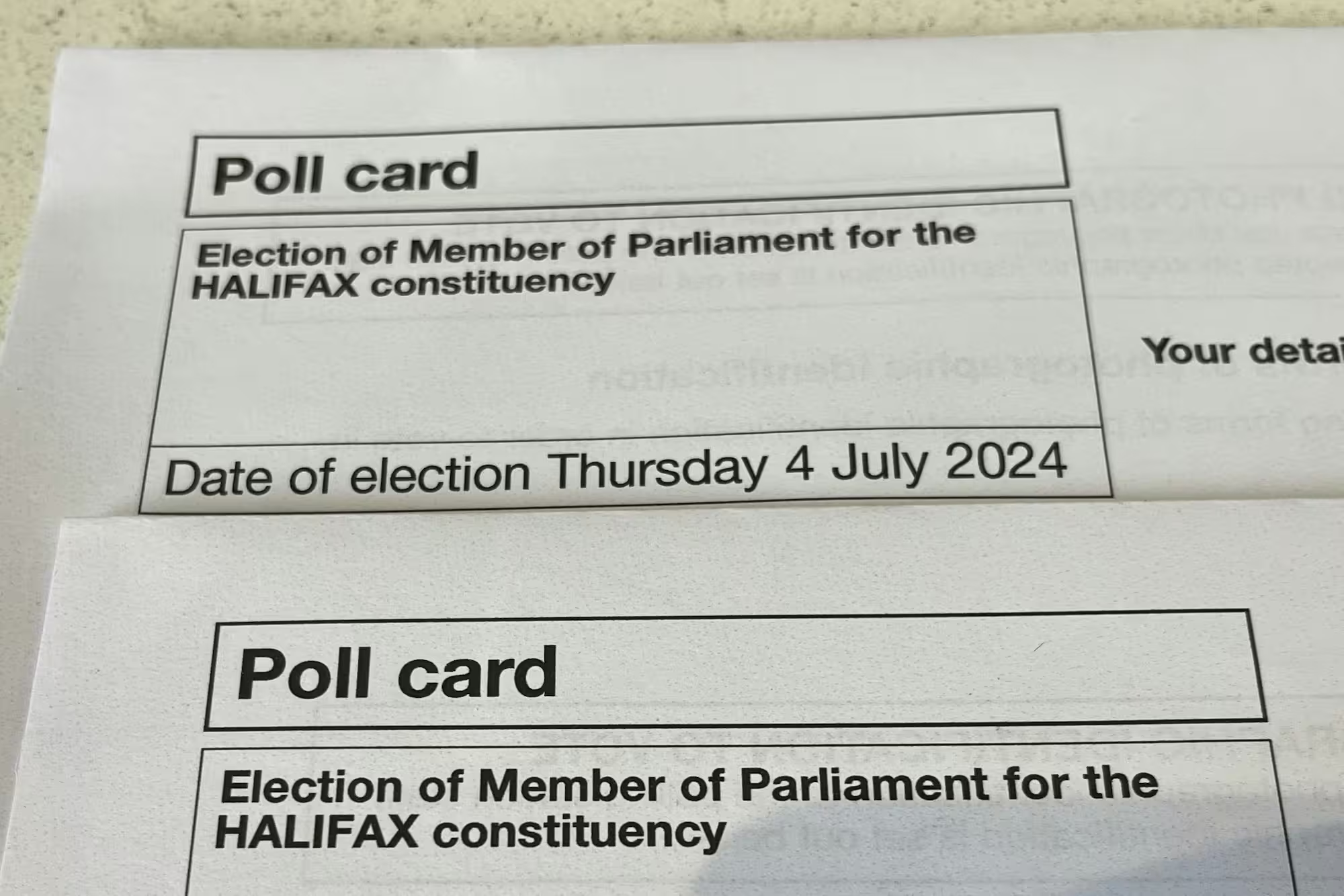
A photo of our polling cards for the Halifax constituency for the General Election

If you’re in Britain, it hopefully hasn’t passed you by that there’s a General Election taking place on the 4th July. It was announced back on the 22 May in a very moist way by our current Prime Minister, Rishi Sunak. Had the Fixed-term Parliaments Act not been repealed, it would have probably coincided with the local and mayoral elections on the 2nd May, but instead we’re being called out for a second election in three months.

We’ve already received our voting cards through the post, but if you haven’t, or you’re not sure if you’re registered to vote, fill out the form now. You have until 23:59 on Tuesday 18th June to register, which is only a few days away.

This will be the sixth general election in which I’ve been eligible to vote. I turned 18 a year after the 2001 general election and so missed it, but I have voted in the 2005, 2010, 2015, 2017 and 2019 elections.

The folks at Democracy Club have a couple of web sites to help you with voting. Where do I vote? tells you where your polling station is, if you’re choosing to vote in person rather than use a postal vote. This information will also be on your polling card, although you don’t need your polling card with you to vote.

Who can I vote for? meanwhile lists the candidates standing in your constituency. There’s a record number of candidates standing this time – a total of 4515 across the 650 constituencies, which averages at almost seven candidates per constituency. Indeed, every constituency has at least five candidates standing, which is a first. As well as the three traditional main parties, the Green Party and Reform UK are fielding candidates in almost every constituency too.

The most is 13 candidates in Richmond and Northallerton, which happens to be where Rishi Sunak is standing. As well as the major parties, Count Binface is there, alongside the Monster Raving Loony Party (who are fielding 22 candidates in total).

In a later blog post, I’ll talk about the seven candidates that I can choose in Halifax, where I live. Although, as I’m a paid-up member of the Labour party, it’s pretty obvious who I’ll be choosing.

A week off

An AI-generated image of a penguin with a disassociated look on its face

Normally I’m pretty good at ensuring that I have enough pre-written blog posts saved up so that I can keep to my aim of publishing a new post every other day. As this is the first new blog post for a week, clearly I haven’t managed to keep it up.

It’s the usual combination of a lack of time and motivation that has meant I haven’t been able to write anything recently. I still have plenty of things that I want to write about, and my list of potential blog post ideas has plenty of suggestions. But I just haven’t been in a mood to sit down and type out my thoughts and opinions recently.

I’ve got a couple of blog posts to write about things that I bought with my birthday money (the first of which was about the Bluetooth thermometers). Regular readers will not be in the least bit surprised that these are related to Home Assistant. Oh, and there’s the small matter of an upcoming General Election.

I’m aiming to spend some time this weekend catching up, so hopefully this is a return to your regularly scheduled 3-4 new posts a week.

Cross-posting on socials

An AI-generated image using Microsoft Copilot showing a stack with the WordPress logo surrounded by smaller stacks with social media logos on them

I’ve recently updated the Feeds page to list ways other ways that you can follow this blog, besides subscribing to the RSS feed. To summarise:

  • There’s the weekly email
  • Any Fediverse app (e.g. Mastodon, Friendica) can follow the blog directly using ‘@nrturner
  • There’s now a dedicated Facebook page
  • I’m automatically cross-posting links to new blog posts to X/Twitter, Mastodon and Bluesky

The Facebook and X/Twitter integration is being done via Buffer and the WP to Buffer plugin. This is because Buffer is one of the few services that still has write access to the X/Twitter API. It also means that I am using my X/Twitter account again, but only to link to my own blog posts. I’m not logging in to interact with other users or post anything there that isn’t a link out to something I host. At least, not until Elon Musk inevitably gets bored, bankrupt or both and sells X/Twitter to someone better.

I think I used to have a dedicated Facebook page for this blog in the past, but I must’ve deleted it at some point. Anyway, there’s a new one which has been around for a couple of weeks and has had basically zero interactions in that time. If you want to very occasionally see my blog posts on your news feed, when the Facebook algorithm deems me worthy, feel free to give it a ‘Like’. I won’t be incorporating any of Meta’s cookies or adtech into this web site, don’t worry.

To cross-post to Mastodon, I’m using the Share on Mastodon plugin. It’s simple but configurable, and does the job well. For Bluesky, I’m using Neznam Atproto Share, which is also simple but configurable. I quite like relatively simple WordPress plugins that just do one or two things, and don’t try to take over your dashboard.

Whilst I have a Threads account, Meta hasn’t opened an API for it yet, so no auto-posts there. Mastodon remains my primary public social media presence, but I do scroll through Bluesky regularly too.

The Black Country Living Museum

A photo of a street scene inside the Black Country Living Museum in Dudley

Following our trip to Dudley Zoo and Castle, we went to the other major tourist attraction in Dudley: the Black Country Living Museum.

Those of us living in the North of England may be familiar with Beamish, which is a large, outdoor museum showing what life was like in the North East during various time periods. The Black Country Living Museum is very similar, but based in the Black Country. This is the area around Dudley, Sandwell, Walsall and Wolverhampton in the West Midlands, and probably gets its name from the mining and/or burning of coal.

Visitors can walk around various buildings that have been transplanted or recreated from the area. These include an array of shops – some of which sell things to buy – as well as a couple of pubs and fish and chip shops. There’s also a school where you can have a ‘lesson’ as if it were the 1950s, and a fairground. The museum also backs onto the Dudley Canal, and a cut from the canal goes through the museum.

Trolleybus

Transport

It’s quite a large site, and so there are transport options to get you from the visitor centre at the entrance into the recreated town. On the day we went, this was a classic diesel bus, but there’s also an electrically-powered trolleybus that was parked up. There’s a tram line as well, but this is currently out of use.

Mines

As mentioned, coal probably inspired the name of the Black Country, and so there are two mines on site. One is a deep mine, The Racecourse Colliery, and the other is a ‘drift mine’ which can be entered on foot. The latter is open for tours, although it’s a realistic simulation rather than a real mine. It does mean that it’s unlikely to collapse, but you’ll need to wear a hard hat as it includes low ceilings that would be typical in this type of mine.

There’s plenty to see, and I would advise going at a weekend when more events take place as we did. Like many attractions, your tickets are valid for one year after your visit, so we may go back another time to see some of the other demonstrations. As you would expect, the museum is also frequently used for filming shows such as Peaky Blinders.

As usual, you can view several more photos on Flickr.

Accessibility

The site is on a slope, and some powered wheelchairs may struggle in some places. Some buildings have narrow entranceways or steps, and the drift mine is uneven under foot. There is an accessible bus available if booked in advance. Some of the industrial exhibits may produce loud and unexpected noises.

ThermoPro TP357 Bluetooth thermometer review

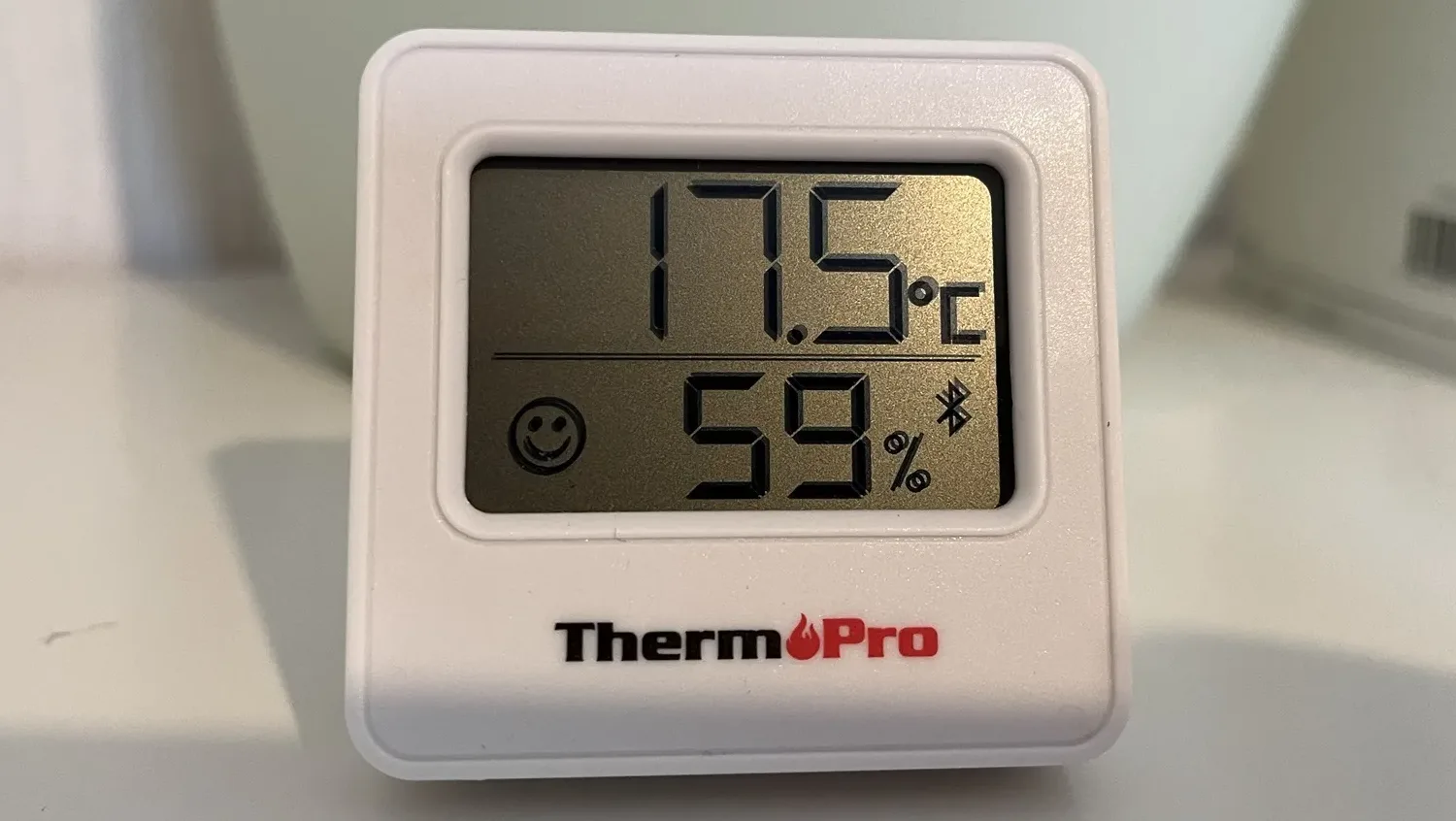
A photo of a ThermoPro TP357 thermometer showing the current temperature of 17.5℃ and humidity of 59% on a LCD display.

I have an upcoming project for Home Assistant which means that I need to be able to measure the temperature in our bedroom. As part of this, I’ve bought a couple of ThermoPro TP357 Bluetooth thermometers from Amazon (sponsored link). One is for our bedroom, and the other is for our eight-year-old’s bedroom which tends to get a bit cold in winter.

I specifically went for these thermometers because they’re:

  • Cheap – I paid £19 for the pair last week, but they’re £16 for the pair as I write this.
  • Supported by Home Assistantthere’s an official integration.
  • No extra hardware required – because they’re Bluetooth, and I run Home Assistant on a Raspberry Pi with a supported Bluetooth chip, there’s no additional hardware required to get the two to talk to each other.
  • Probably good battery life – Bluetooth is quite energy efficient when compared with, say, Wifi, and so the batteries should last longer.
  • No need to use the cloud – all the data can be stored locally on Home Assistant.

ThermoPro TP357 look and feel

The ThermoPro units are smaller than I expected. They’re about as tall as a credit card but roughly square, so they’re narrower than a credit card. Each one runs on one AAA battery which is provided. On the back is a flip out kick-stand, a magnet and a hook, so you can wall-mount it, stick it to your fridge or have it free-standing on a shelf like I do. There’s also a button on the back that switches it between Fahrenheit and Celsius.

On the front, there’s an LCD screen which shows the current temperature and humidity level. There’s also a face pictogram – it’ll smile when the humidity is between 30-60%, frown when it’s less than 30% or show a neutral expression if it’s over 60%.

Home Assistant integration

If you have Bluetooth enabled on your Home Assistant device, then a few minutes after you put the battery in, Home Assistant should pop up a notification to say it’s discovered a new ThermoPro device. You’ll just need to confirm that you want to set it up and allocate it to an area, and you’re done.

As you would expect, the ThemoPro integration reveals entities for temperature and humidity, but also the battery level. I’m not sure how accurate this is, as both provided AAA batteries just show 50%. I’ve added these to my Home Assistant dashboard, and have set up some additional functionality that I’ll blog about later. Mainly because, despite allegedly being ‘summer’ in the UK right now, it’s not been warm enough for me to test.

The range seems quite good on these. ThermoPro claim that there’s an 80 metre range in direct line of sight. There’s a few thick walls between my Home Assistant device and the thermostats, and one that is around 5 metres away doesn’t have great signal strength but it’s enough.

ThermoPro app

Of course, ThermoPro expect you to use their app for iOS and Android. This includes logging of up to a year’s data, and you can set notifications based on events related to the humidity and temperature. Well, that’s what it says – I haven’t actually installed the app. I’m not yet sure if it’s possible to have the app and Home Assistant communicate with the thermostat at the same time. But theoretically, anything the app can do, Home Assistant can do too.

Alternatives

I’ve had various Facebook adverts for alternatives to these. Some have e-ink displays, which are more readable at a distance, or use different protocols to Bluetooth. But they’re all more expensive. These two seem to do the job well and are small and cheap. Plus, it should be quite a while until I need to replace the batteries.

IF – a film about imaginary friends

At the weekend, we went to see IF at the cinema. You’ve probably seen the trailer, as it’s the latest film to star Ryan Reynolds.

It’s about a 12 year old girl, who is going through some hard times, and realises she can see the imaginary friends of others. Unfortunately, these ‘ifs’ can no longer be seen by their kids, and are looking for new kids to befriend. The BBFC rate it as a U, so it’s suitable for kids, but they do warn of ‘bereavement themes’.

I enjoyed it, and there definitely seems to be a split between the audience and critic scores. On RottenTomatoes, the critics score it 49% but audiences 88%. If you do go and see it, bring tissues; our eight-year-old has seen it twice now and teared-up both times. And maybe don’t think too hard about the plot; The Guardian’s review highlights a number of plot holes.